Life as a coal miner
The underside of the Gilded Age
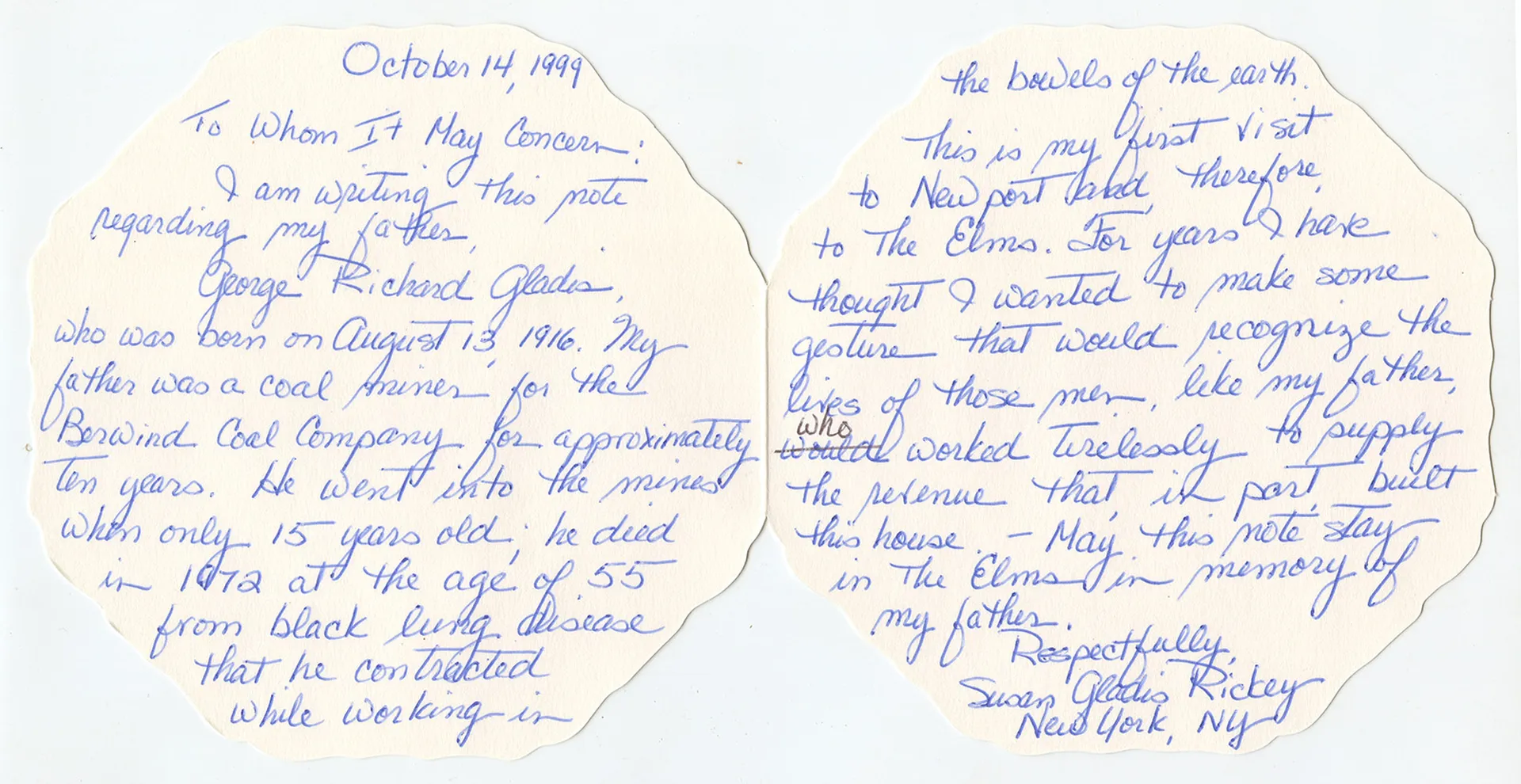
Letter to The Elms from Susan Gladis Rickey, the daughter of a Berwind-White coal miner, 1999. [1]
Like Susan Gladis Rickey’s letter about her father’s experience as a coal miner on display in the Cold Kitchen, a 1922 strike in the Berwind-White mining town of Windber, PA highlights the realities of mining life.
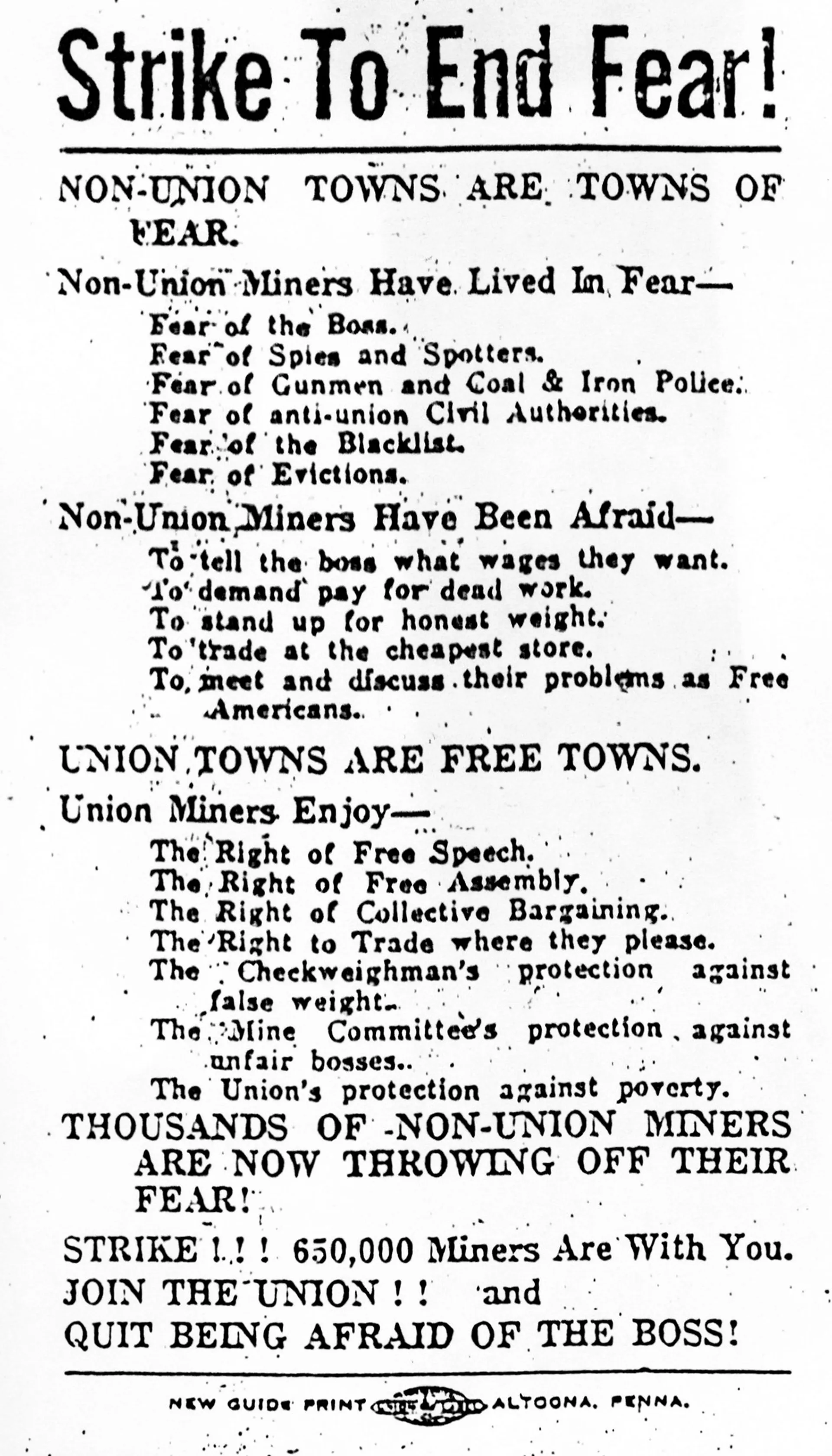
UMWA District 2 strike call to non-union miners, c. 1922–1923.[2]
Twelve years after the 1906 strike, Windber miners struck again. On April 1, 1922, they joined a general strike initiated by the United Mine Workers of America (UMWA). Nationwide, miners demanded the right to unionize, fairer wages, and relief from the total control of coal operators. The general strike lasted 163 days before a settlement was reached.
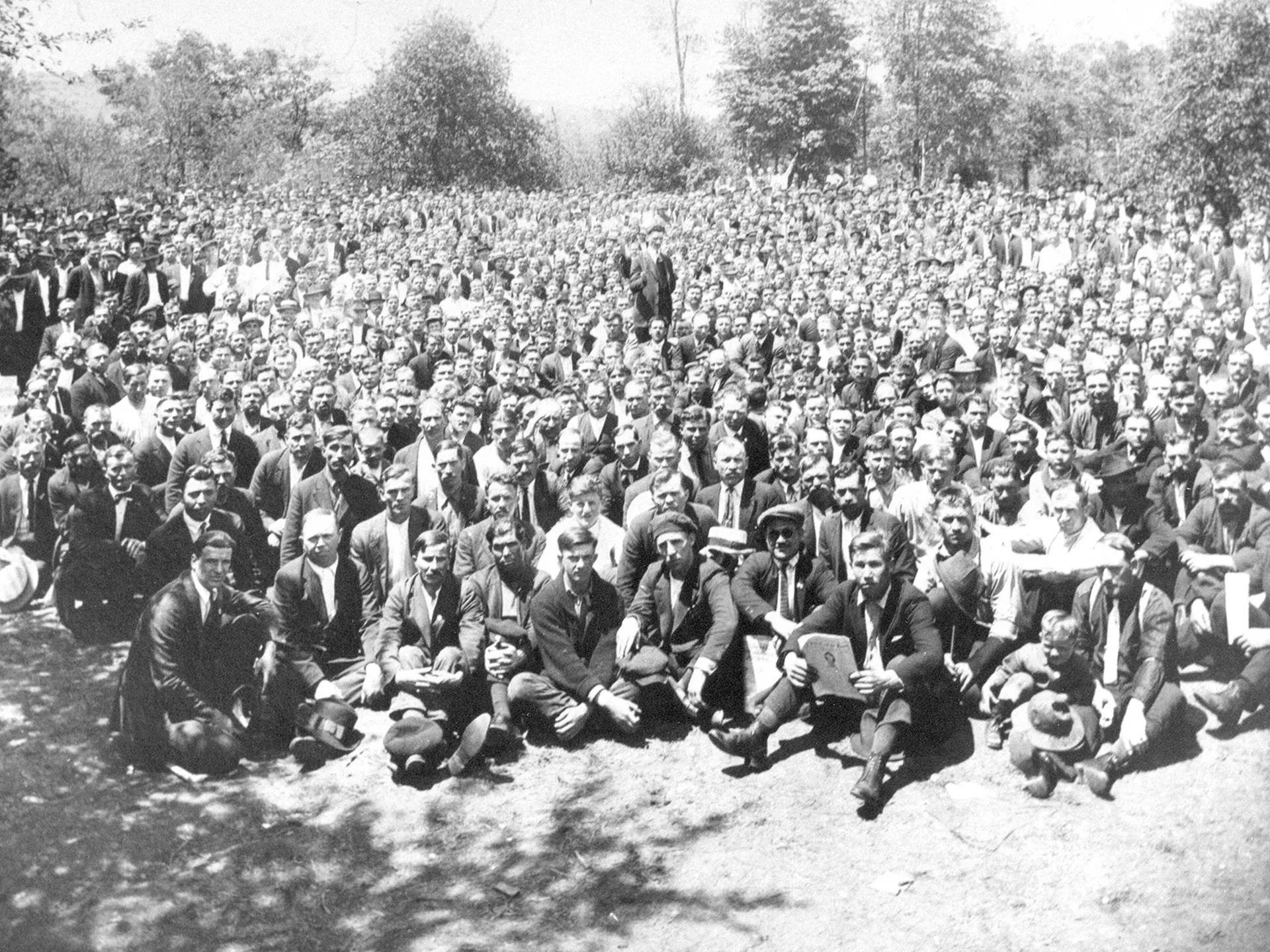
UMWA strike meeting in Scalp Level, PA, 1922.[3]
Although mining resumed on September 11, 1922, approximately 25,000 Windber miners continued striking. Consequently, Berwind-White evicted the striking miners and their families. With nowhere to go, they set up tent camps in Windber. As their living conditions deteriorated, a group of miners organized a protest in New York City.
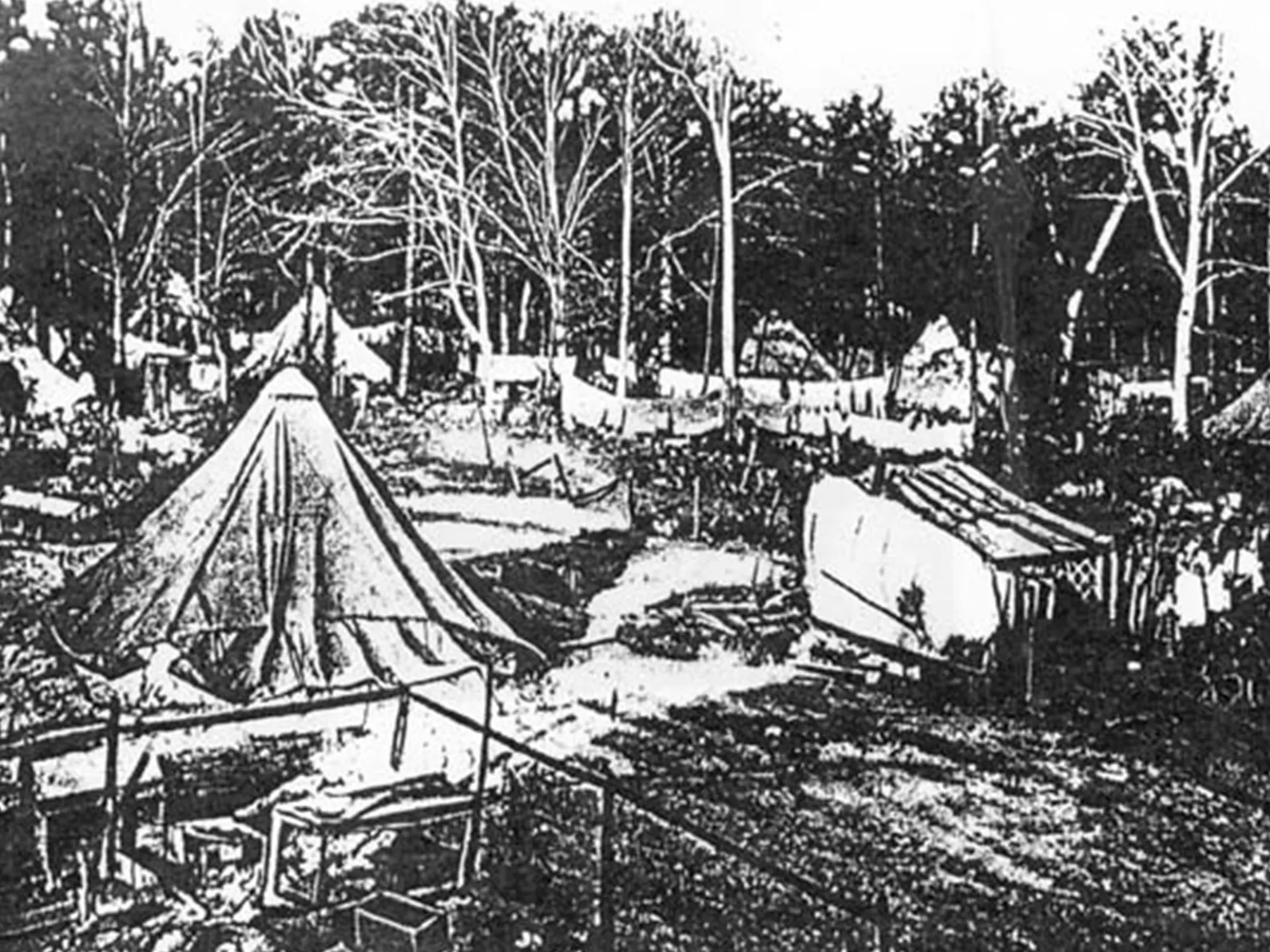
Tent colonies of evicted Windber miners, September 1922.[4]
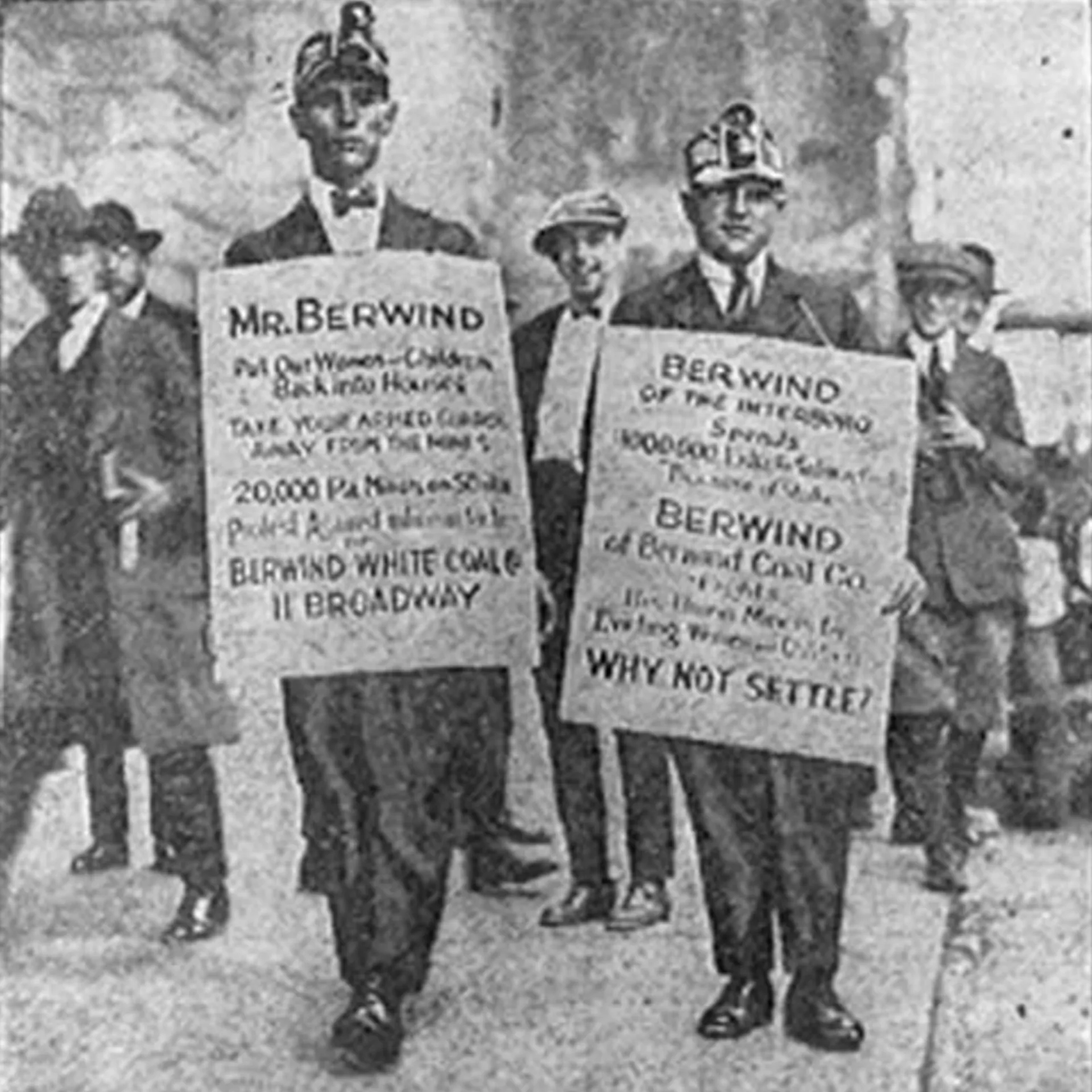
Windber miners picketing in New York City, 1922.[5]
In response, the New York mayor organized a committee to investigate the miners’ claims of inadequate shelter and food. The committee visited Windber, spoke to the families, and observed the camps. Its report ultimately confirmed the miners’ charges, declaring that living and working conditions “were worse than the conditions of the slaves prior to the Civil War.”
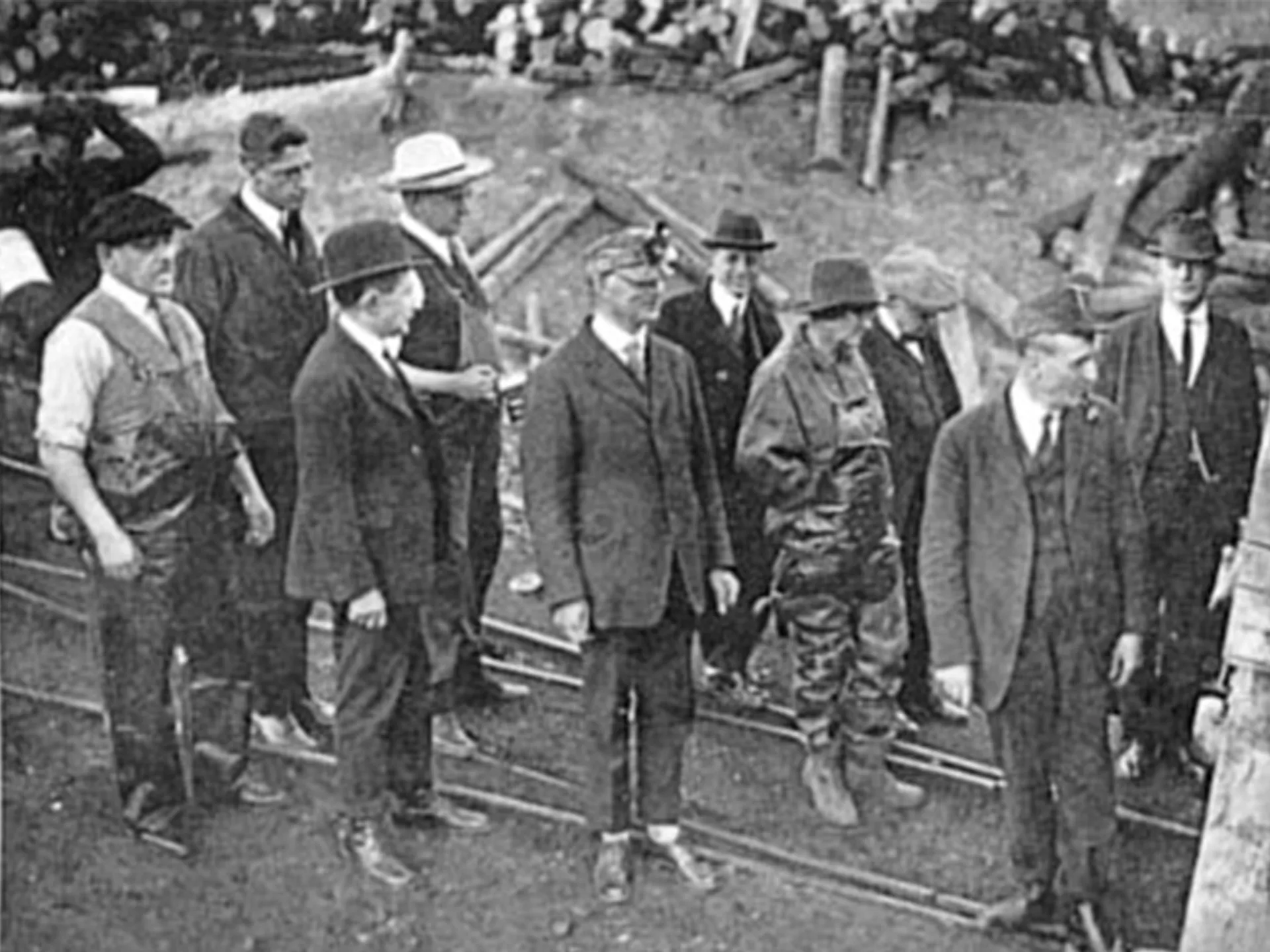
Hirshfield Committee entering one of the Windber mines, c. 1922.[6]
Despite the horrific conditions the investigation uncovered, the Windber miners struck for another eight months before concluding on August 14, 1923 without a new contract. They may have raised the national consciousness, but it would be another ten years before Windber miners could freely join the UMWA and Berwind-White recognized the union.
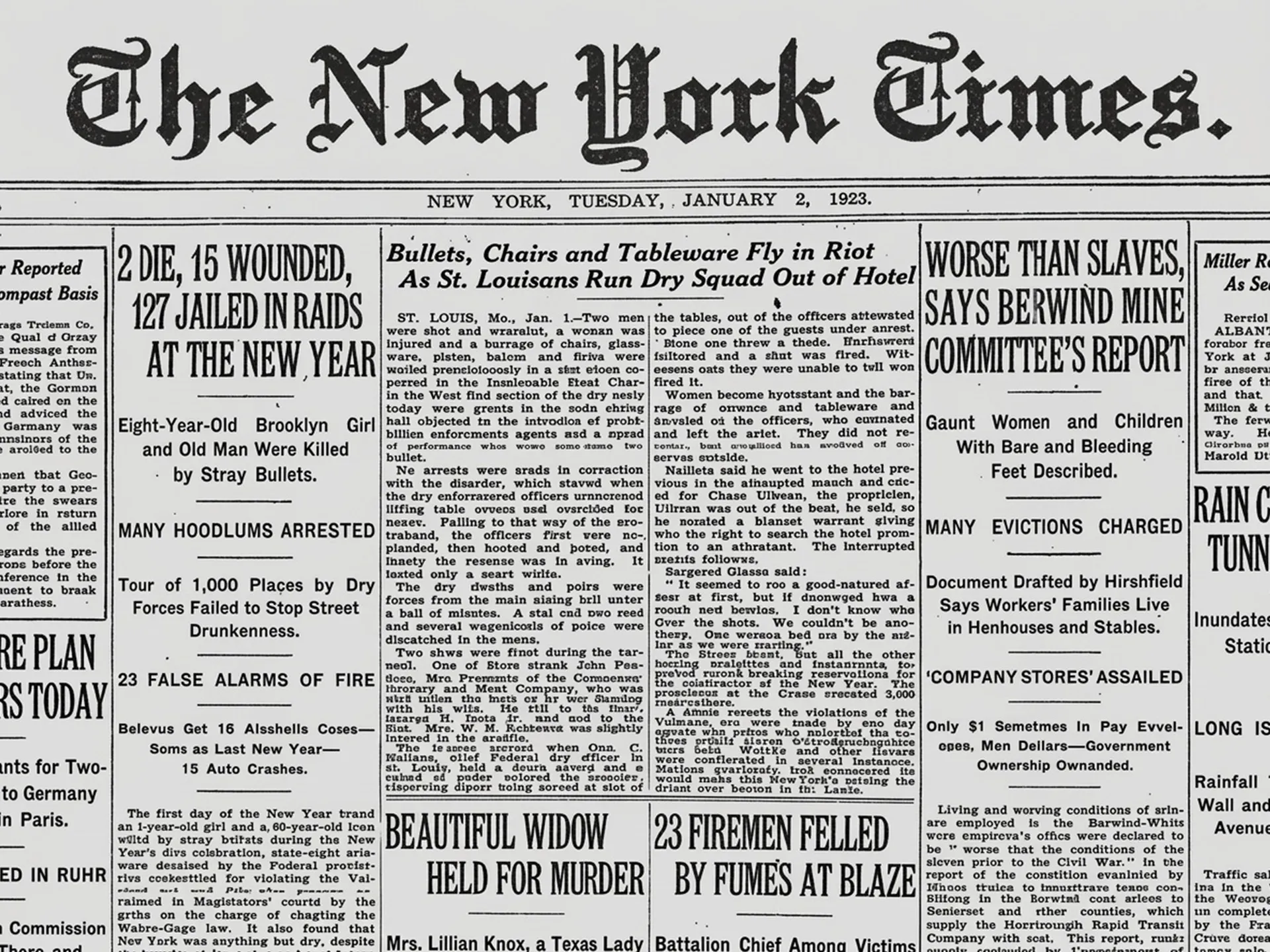
Article from The New York Times, January 2, 1923.[7]
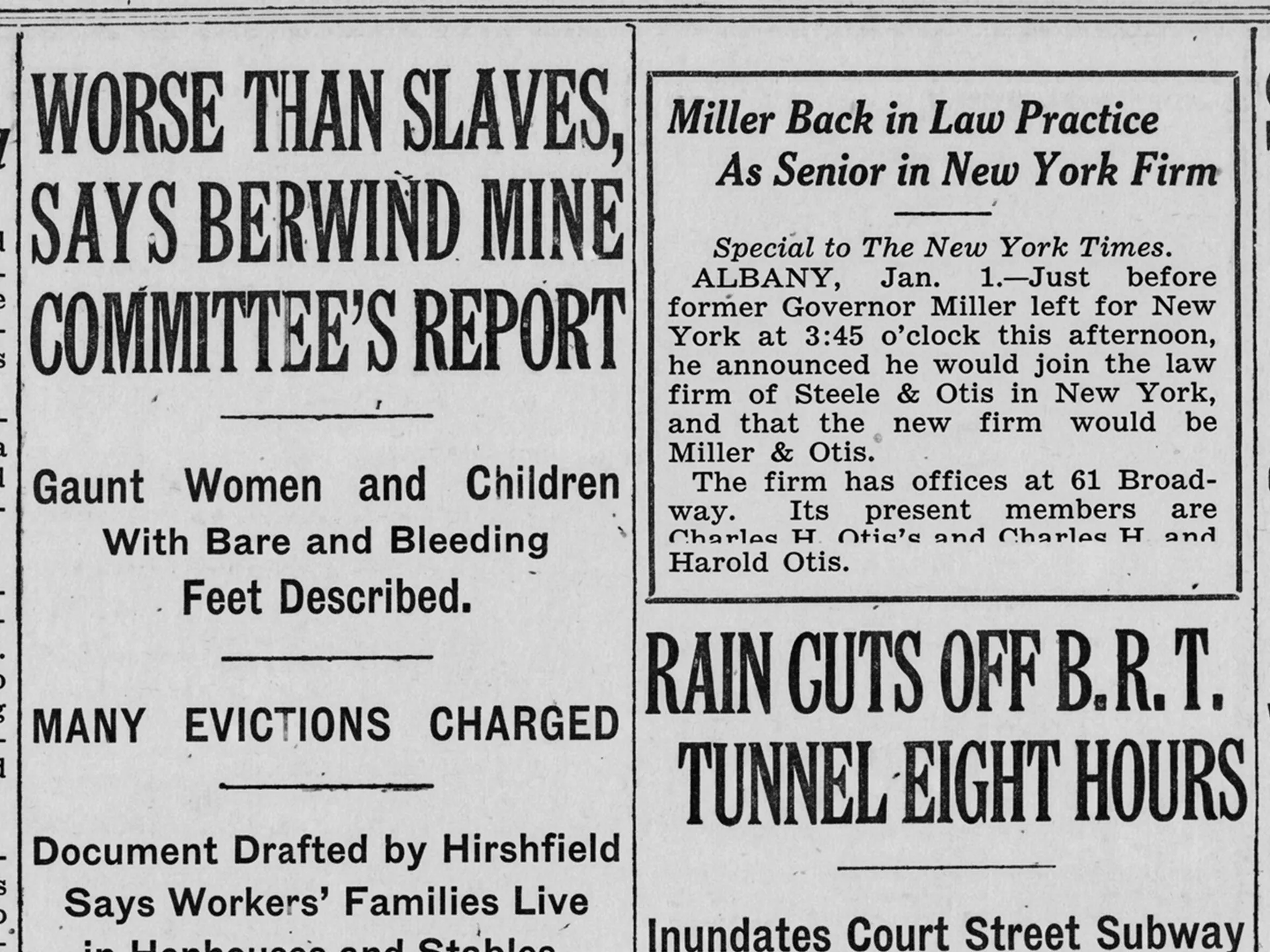
A closer look at the article from The New York Times, January 2, 1923.
Primary sources cited
Rickey, Susan Gladis, Letter to The Elms, October 14, 1999, The Preservation Society of Newport County.
United Mine Workers of America, UMWA District 2 strike call to non-union miners, c. 1922–1923, District 2 Records, IUP Libraries Special Collections and University Archives, Indiana University of Pennsylvania.
"Primary Sources about the Windber Miners' Strike for Union in 1922-1923," Indiana University of Pennsylvania, web source.
"Primary Sources about the Windber Miners' Strike for Union in 1922-1923," Indiana University of Pennsylvania, web source.
"Primary Sources about the Windber Miners' Strike for Union in 1922-1923," Indiana University of Pennsylvania, web source.
"Primary Sources about the Windber Miners' Strike for Union in 1922-1923," Indiana University of Pennsylvania, web source.
"Worst than Slaves, Says Berwind Mine Committee’s Report," The New York Times, January 2, 1923, p.1.