Music & dance in the Gilded Age
The evening’s entertainment
The music playing in the Ballroom is the “Titania Waltz” from Franz von Suppe’s operetta Die Afrikareise (“The Trip to Africa”). On the screens, couples dance waltz variations popular in the early 1900s. But waltzing solo with a partner was only part of the fun at a Gilded Age ball.
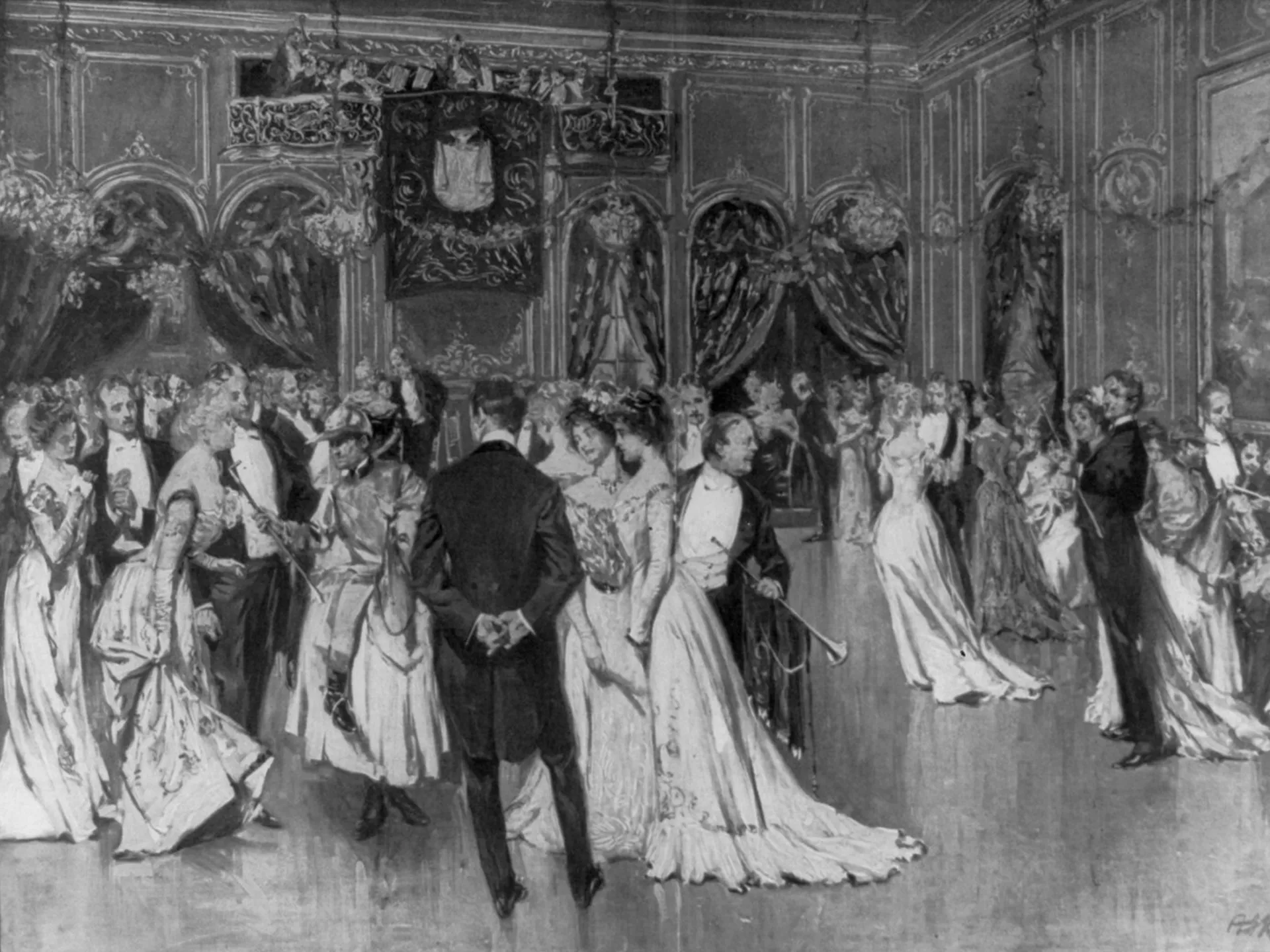
Half-tone reproduction of original painting The First Cotillion of the Century by A. Keller, 1901.[1]
Larger groups danced the cotillion, which consisted of “figures,” or various sequences introduced by a dedicated leader. The cotillion was a complex and lengthy endeavor, often serving as the culmination of the evening. For example, 126 couples danced six figures at The Elms’ housewarming.
As with other aspects of Society, etiquette was essential in the Ballroom. An 1895 dance manual advised dancers not to “romp” or join figures with which they’re not familiar. The author noted that “perfect politeness conceals preference” and cautioned women about entering or promenading the ballroom alone.
After the supper the cotillion was danced led by Elisha Dyer, jr., with Mrs. Berwind. [2]
The New York Tribune
According to The New York Times, Elisha Dyer, Jr. led the cotillion with Herminie during the August 1902 Alice Roosevelt dance. The introduction of “new figures” and “novel favors” kept guests dancing to Mullaly’s Orchestra and Berger’s Hungarian Band well into the night.
Primary sources cited
Keller, A.,The First Cotillion of the Century, halftone reproduction of painting, Harper's Weekly, vol. 45, Jan.-June 1901, 62-63, Library of Congress, web source.
“Mrs. Berwind’s Great Ball,” The New York Tribune, August 31, 1901, p 6.