Chinese-inspired design
A global crossroads in Newport
Like European decor, historical Asian art and furnishings were another way American collectors signaled status in the Gilded Age. Some, like the China Trade merchants at Kingscote and Chateau-sur-Mer, displayed pieces they collected firsthand in Asia. Others, including the Berwinds, followed a long tradition of imitating motifs from cultures they had not personally encountered.
The Breakfast Room contains both original Chinese and Chinoiserie-style furnishings. “Chinoiserie” refers to the imitation of Chinese motifs and ornaments in Western decorative arts. The practice originated in 17th century French design.
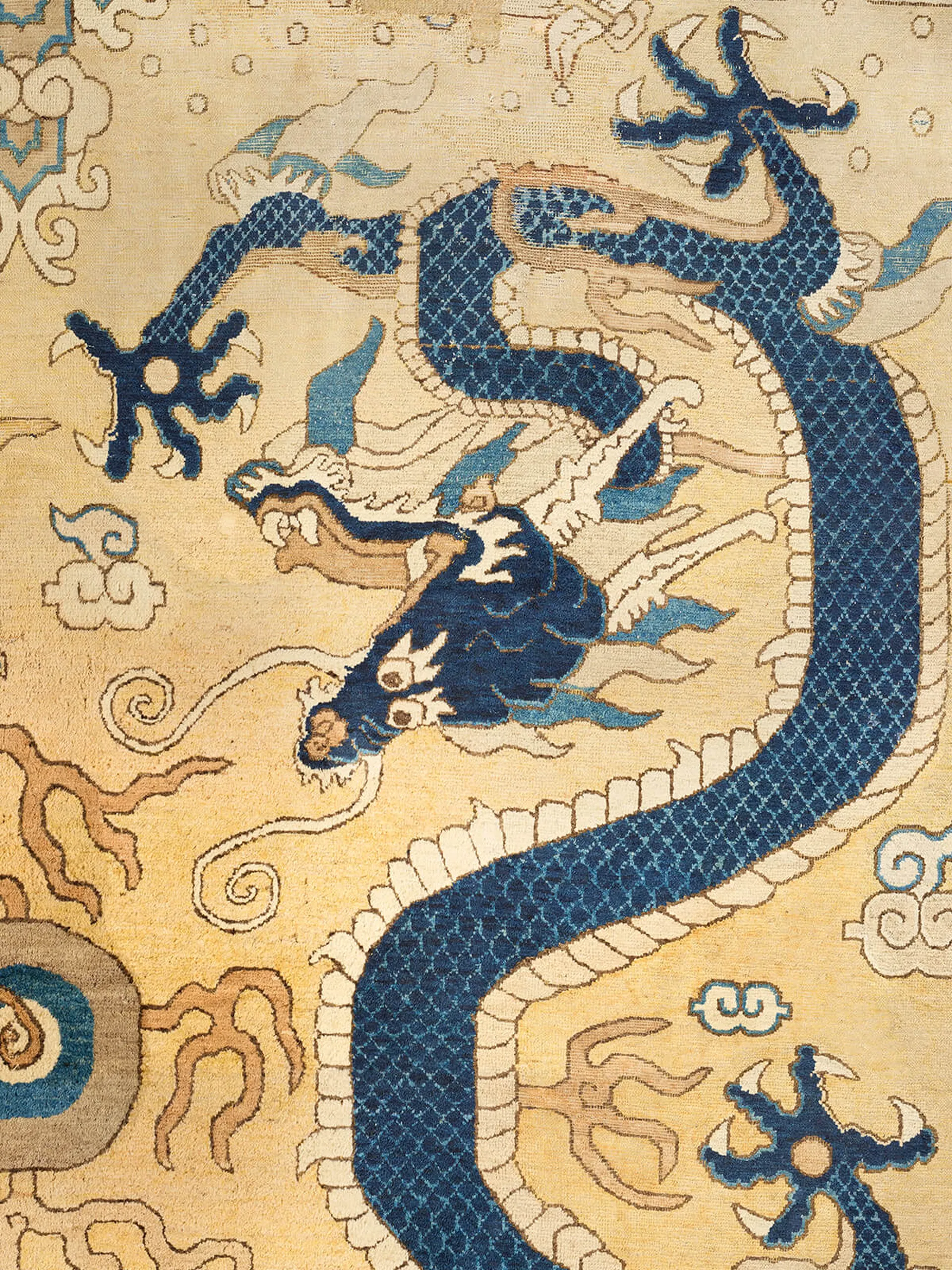
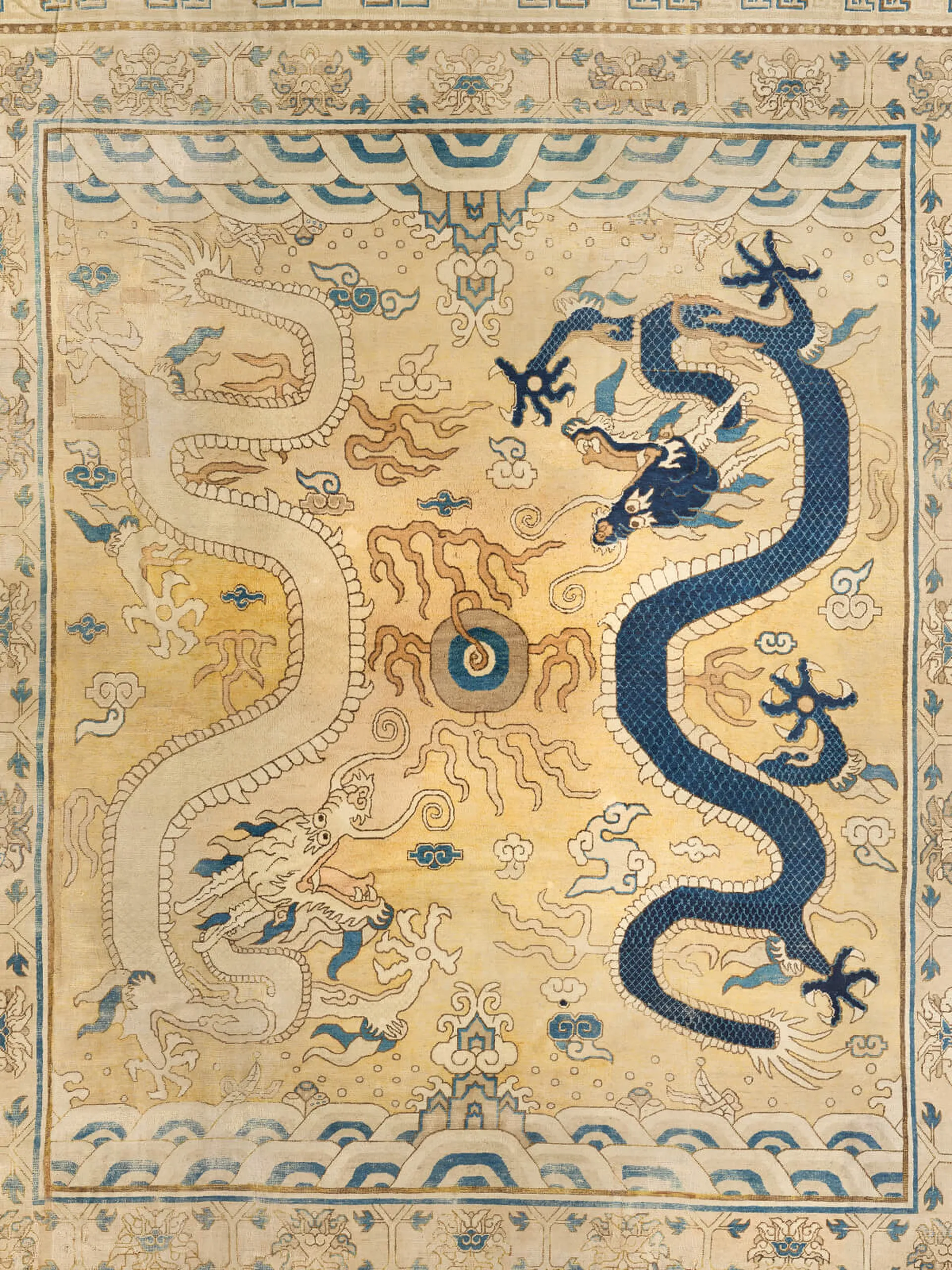
The original Chinese pieces include the 18th century lacquer wall panels, excluding the French-made replica on the garden wall. Although the dragon rug on display in the Breakfast Room is a replica, the original was made in Ningxia in the early 19th century.
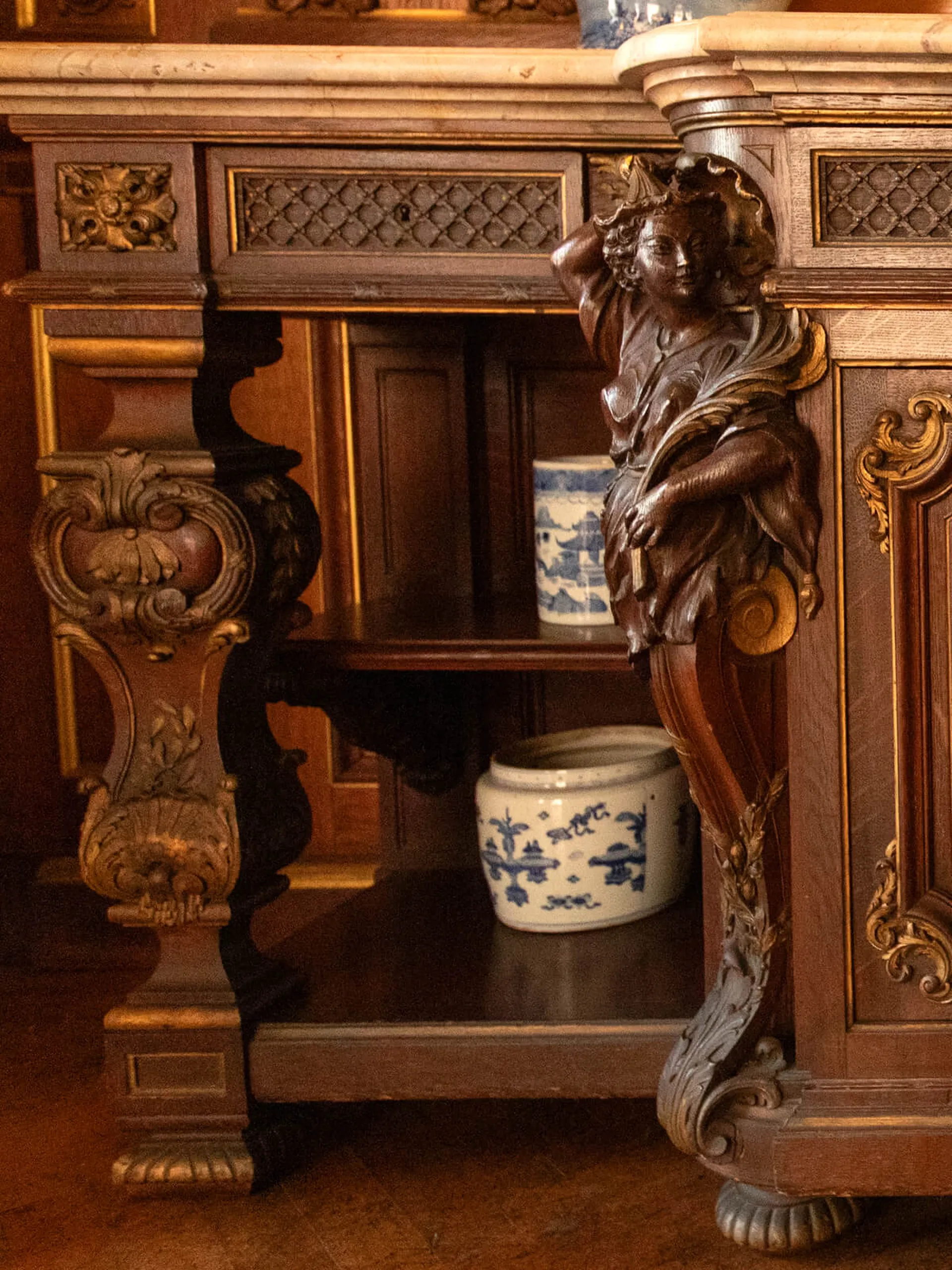
The Breakfast Room features three buffet bas (French for sideboard) manufactured in Paris in the late nineteenth century by the Allard workshops. The sideboard’s caryatids—or the support structures carved to resemble female figures—demonstrate motifs characteristic of seventeenth-century French Chinoiserie design.