Service à la russe
Perfecting an aspirational mode of dining
At The Elms, formal dinners were usually served à la russe, with each dish individually plated and served in sequence. By the early 1900s, this style was gradually replacing buffet-style service, known as à la française. As the more elaborate approach, à la russe enabled wealthy households to signal status.
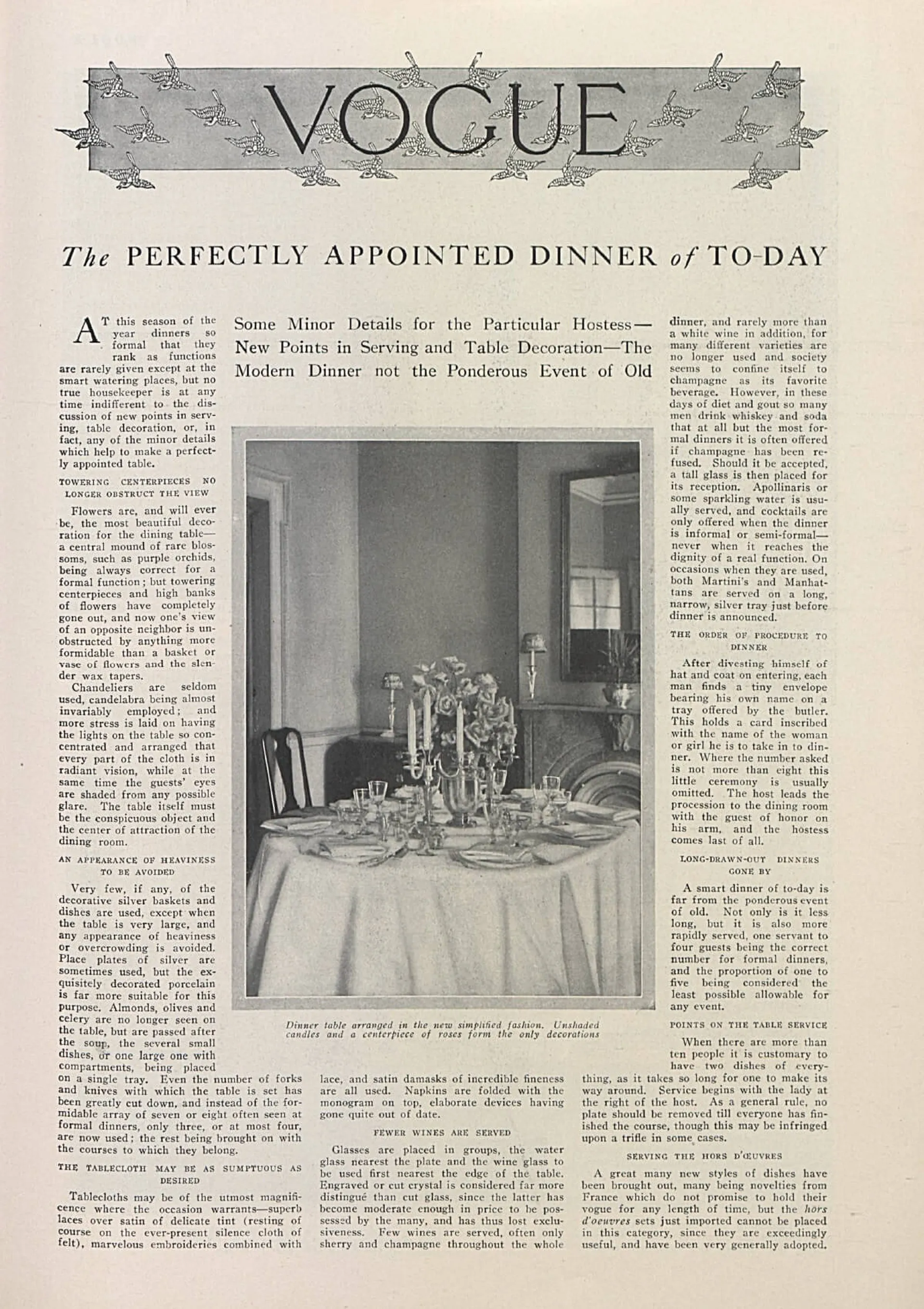
Article published in Vogue, July 11, 1911.[1]
In the Butler’s Pantry, the staff received courses from the Main Kitchen and plated them for each guest. The selle d’agneau rôti (French for “roast saddle of lamb”) sits on the table. After presenting the whole roast to the Dining Room, the butler would return to the pantry to carve and plate it with peas and potatoes.
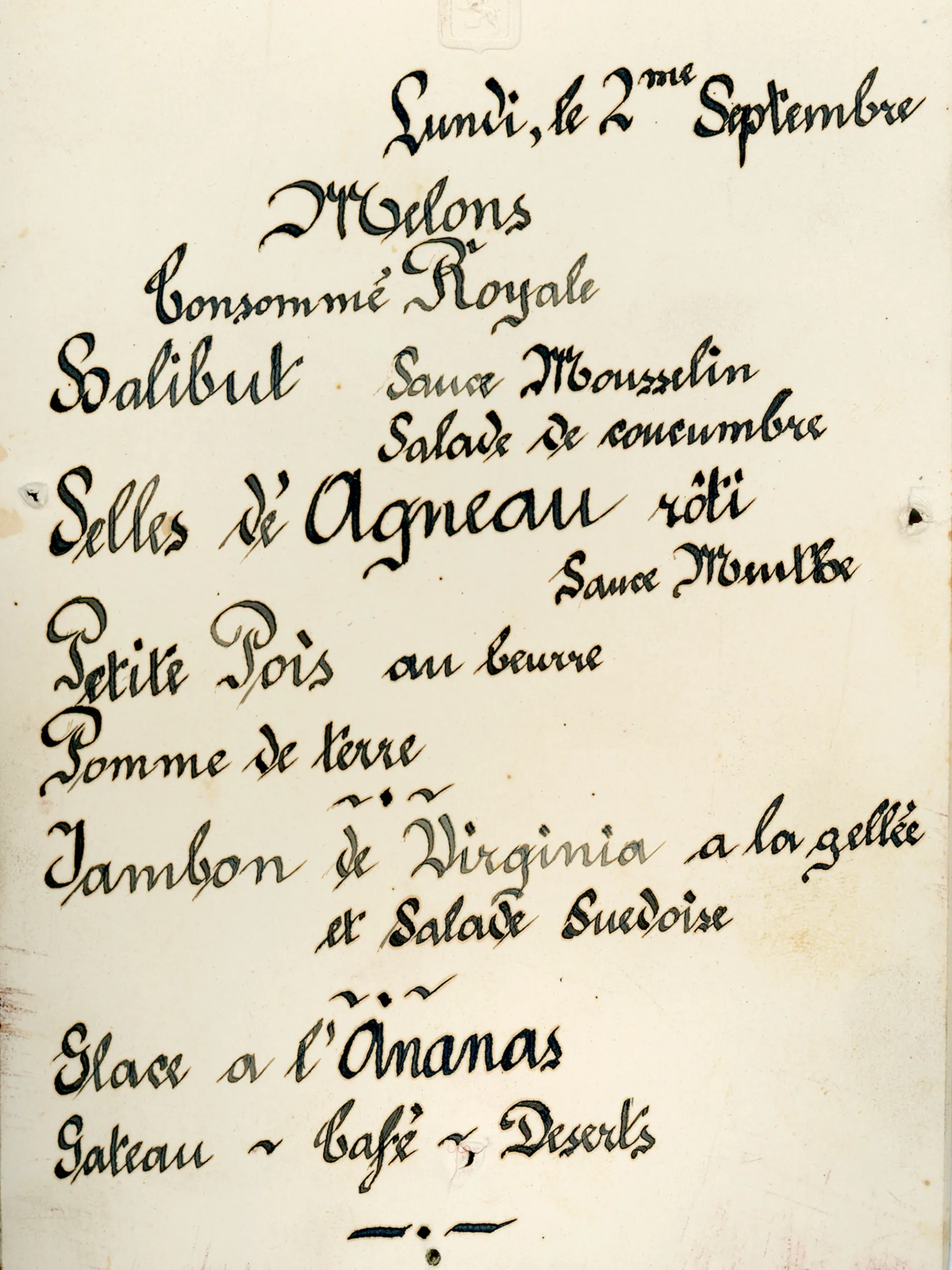
Dinner menu for an evening hosted at the Elms, September 1902.[2]
The dumbwaiter holds the next course: Jambon de Virginia a la gelée et Salade Suedoise (French for “Virginia ham with jelly and Swedish salad”).
The wines the Berwinds served differed from what we know today. Typically, reds were lighter and more tannic, while whites were sweeter and darker. Pairings did not follow strict rules, and Champagne was often poured throughout the meal, sometimes exclusively. Guests might also sip Apollinaris, a sparkling German mineral water.
Primary sources cited
"How the Smart World Entertains: Tables of Hostesses Today," Vogue, July 11, 1911.
Dinner Menu from The Elms, 1902, digital scan, The Preservation Society of Newport County.