Last stop before dinner service
The use & purpose of the Butler’s Pantry
A multi-course dinner in Newport had to run smoothly, without disruptions from cooking operations or working staff. To shield guests from food aromas and noise, kitchens were often relegated to the basement. The Butler’s Pantry offered another layer of protection, enabling efficient service without exposing guests to the mechanics of food preparation.
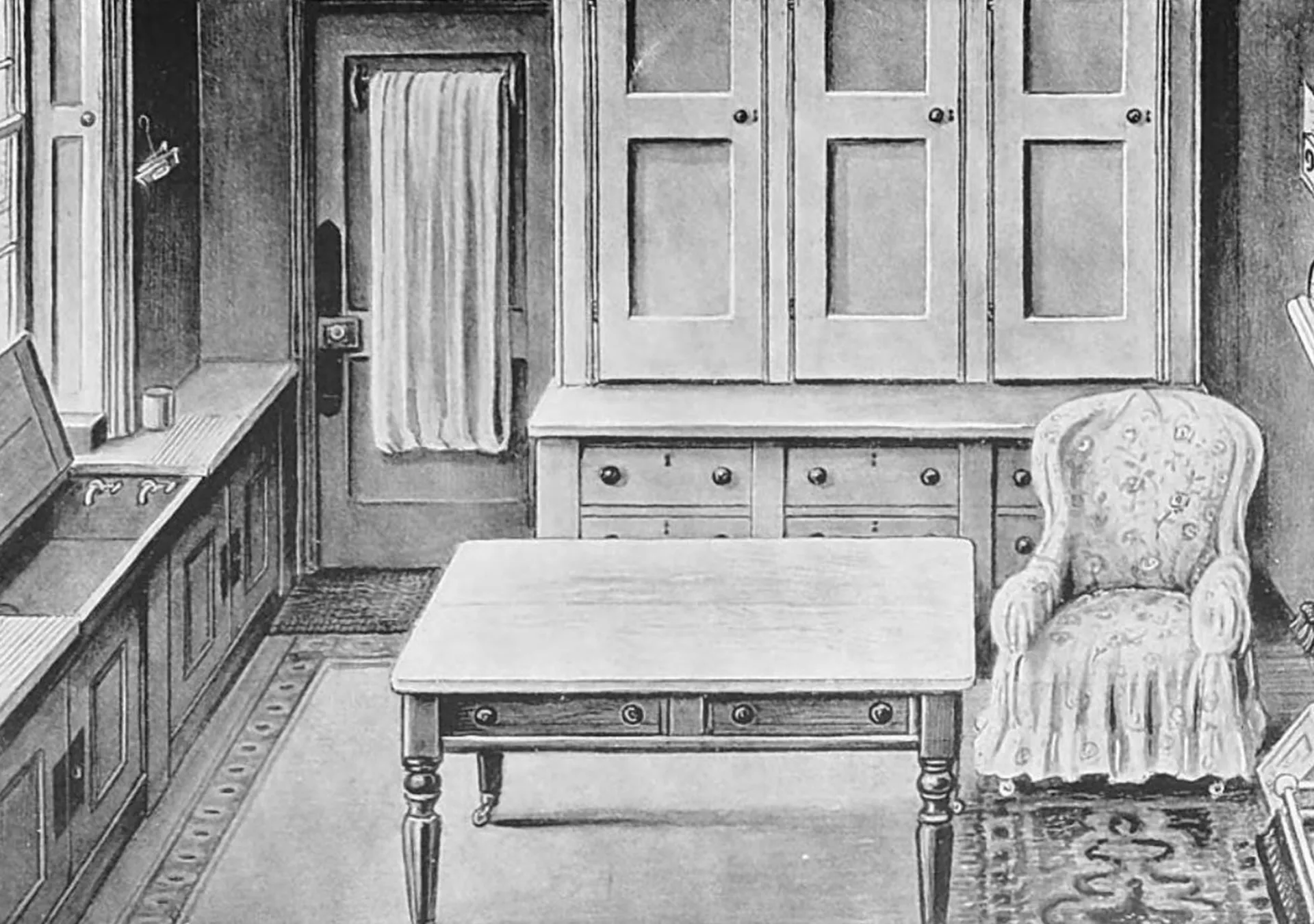
The Butler's Pantry, illustration from Mrs. Beeton's Book of Household Management, 1906.[1]
The electric dumbwaiter was integral to seamless service. It transported china, food, and dirty dishes between the mezzanine Butler’s Pantry upstairs, the first floor Butler’s Pantry, and the Kitchen Pantry in the basement. Staff operated the dumbwaiter quietly to avoid bothering guests in the Dining Room next door.
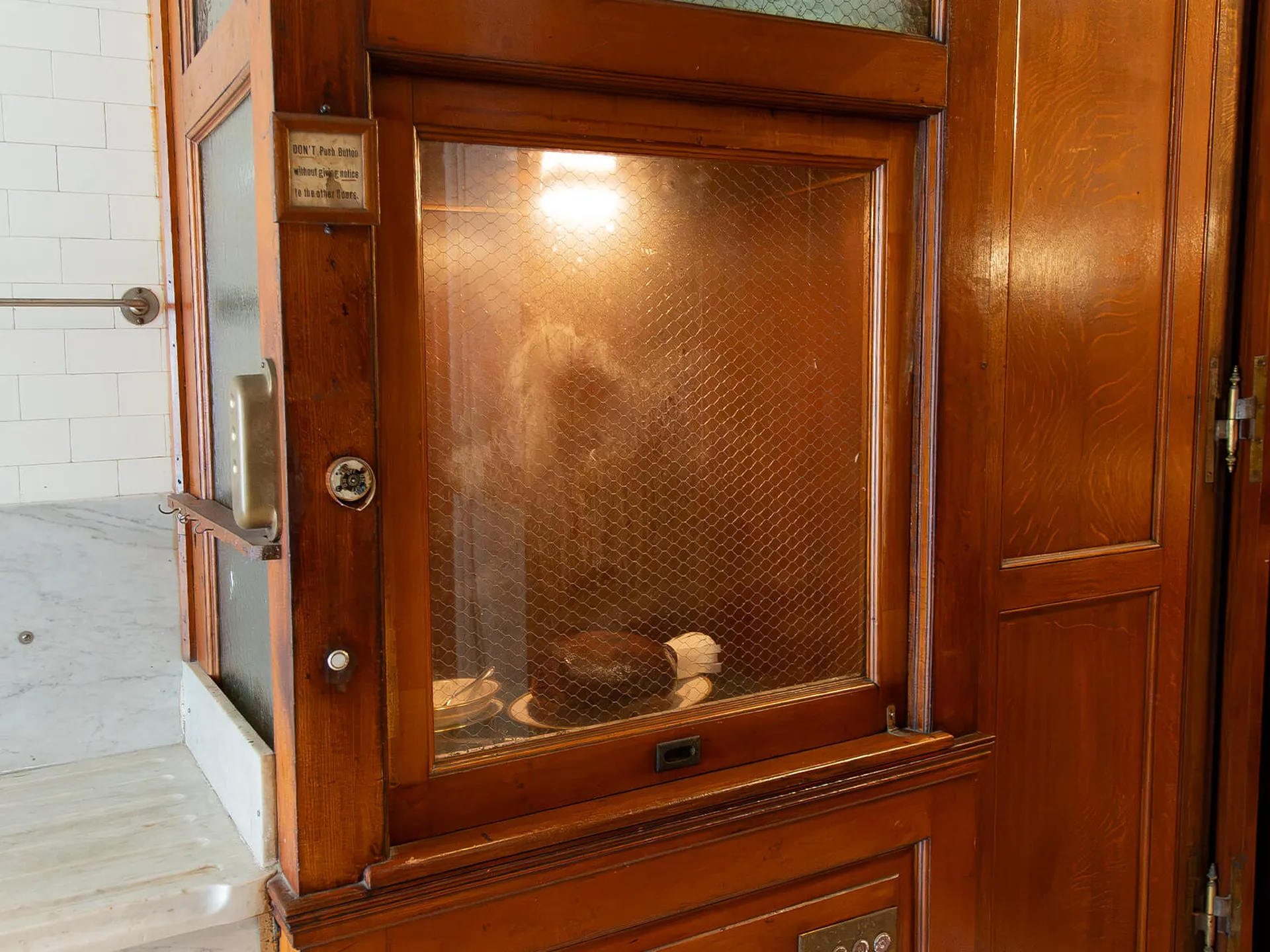
If you look up while in this room, you can see the mezzanine-level Butler’s Pantry. The Berwinds’ china collection and silverware were stored there.
The room has “butler” in its name, but an entire team facilitated the meal. While the butler oversaw the staff and carved the meat, footmen served the guests. The housekeeper timed each course; premature or late plating could ruin a dish. A maid also worked the dumbwaiter.
Primary sources cited
Beeton, Isabella Mary, Mrs. Beeton's Book of Household Management, (Ward, Lock & Co., Limited, 1906), 1776, Google Books.