Monkey ownership
The talk of the town
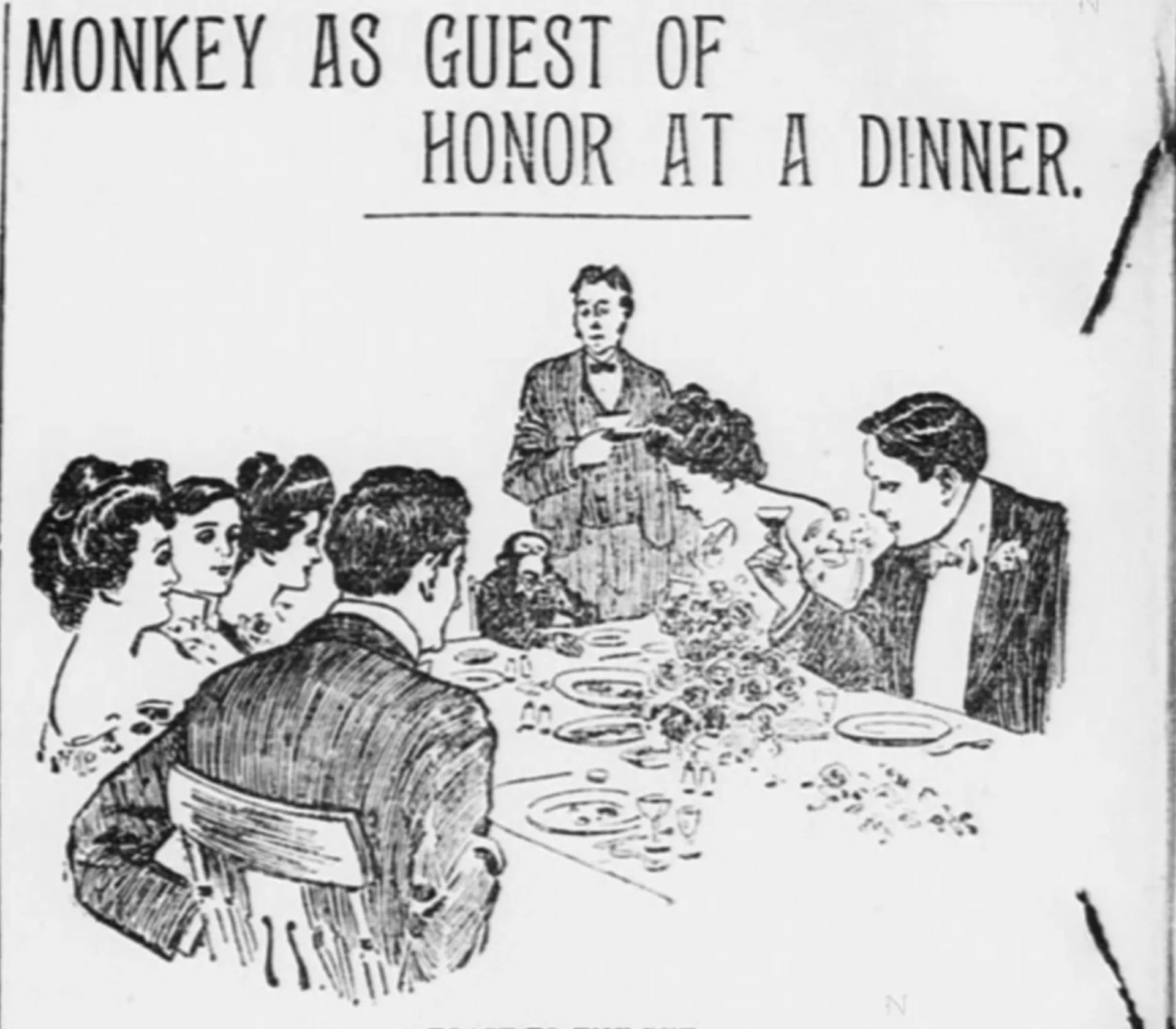
Illustration in The St. Louis Republic, July 13, 1902.[1]
Colonialism introduced the practice of monkey ownership to Europe. By the nineteenth century, affluent Americans were likely replicating this European tradition of imperial spectacle. Newport, in particular, was famous for outrageous entertainments, such as dinners for animals and lavish costume parties.
Title page of Notes on Pet Monkeys, by Arthur Patterson, 1888.[2]
Herminie’s pet monkeys were present at The Elms’ housewarming party in 1901. According to The New York Tribune, “A weirdness was added to the scene by the chatter of pet monkeys, which have the liberty of the lawns.” After The Elms’ staff struck for a second time in 1902, newspapers blamed the six monkeys Herminie kept as pets.
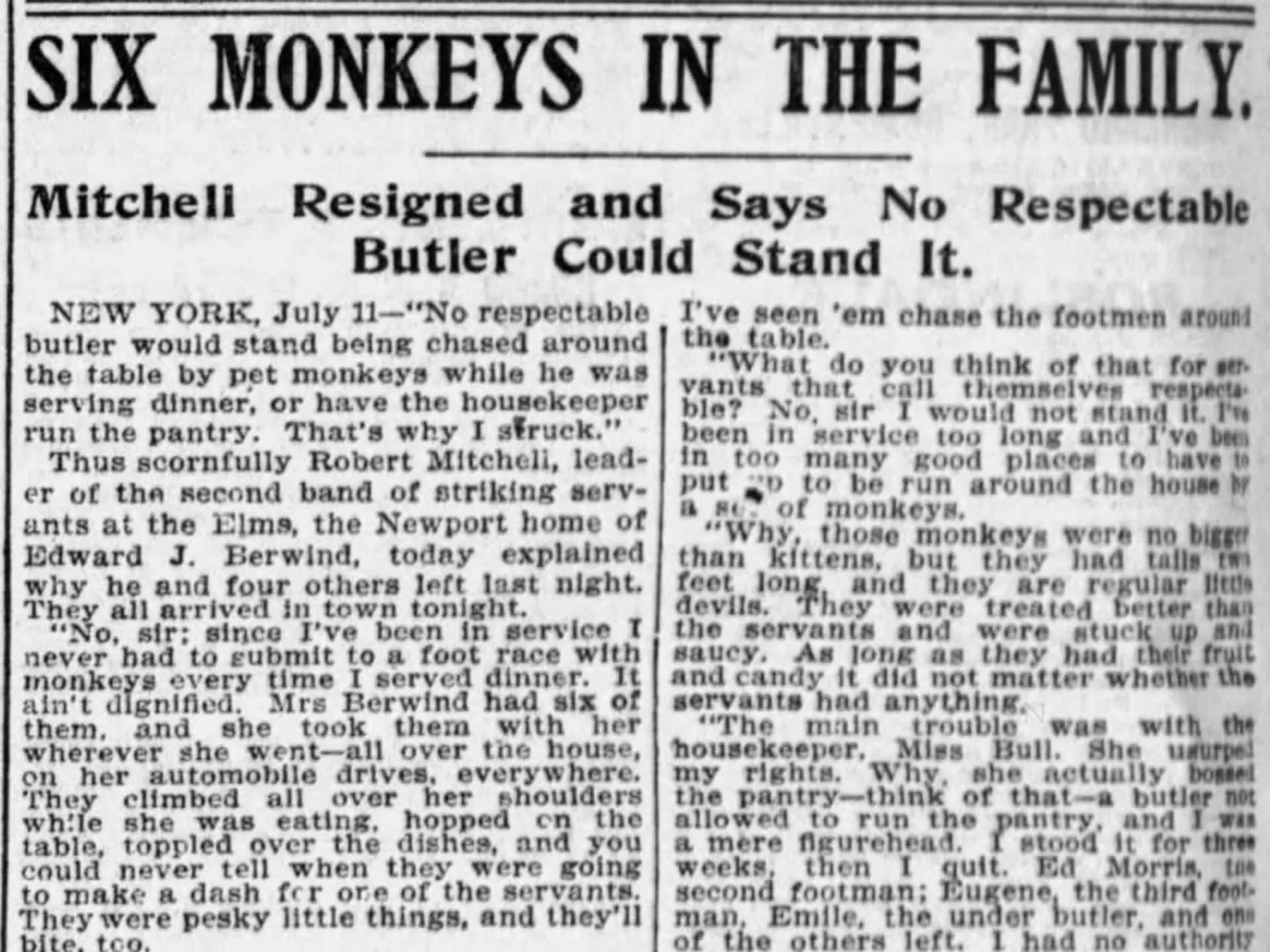
Article detailing the July 1902 walkout at The Elms, published in The Boston Globe, 1902.[3]
That same summer, Harry Lehr and Mamie Fish hosted a dinner featuring a monkey named “Jocko” that’s still cited as evidence of the follies of Newport wealth. Details of the event and whether Jocko misbehaved or acted like a gentleman remain up for debate.
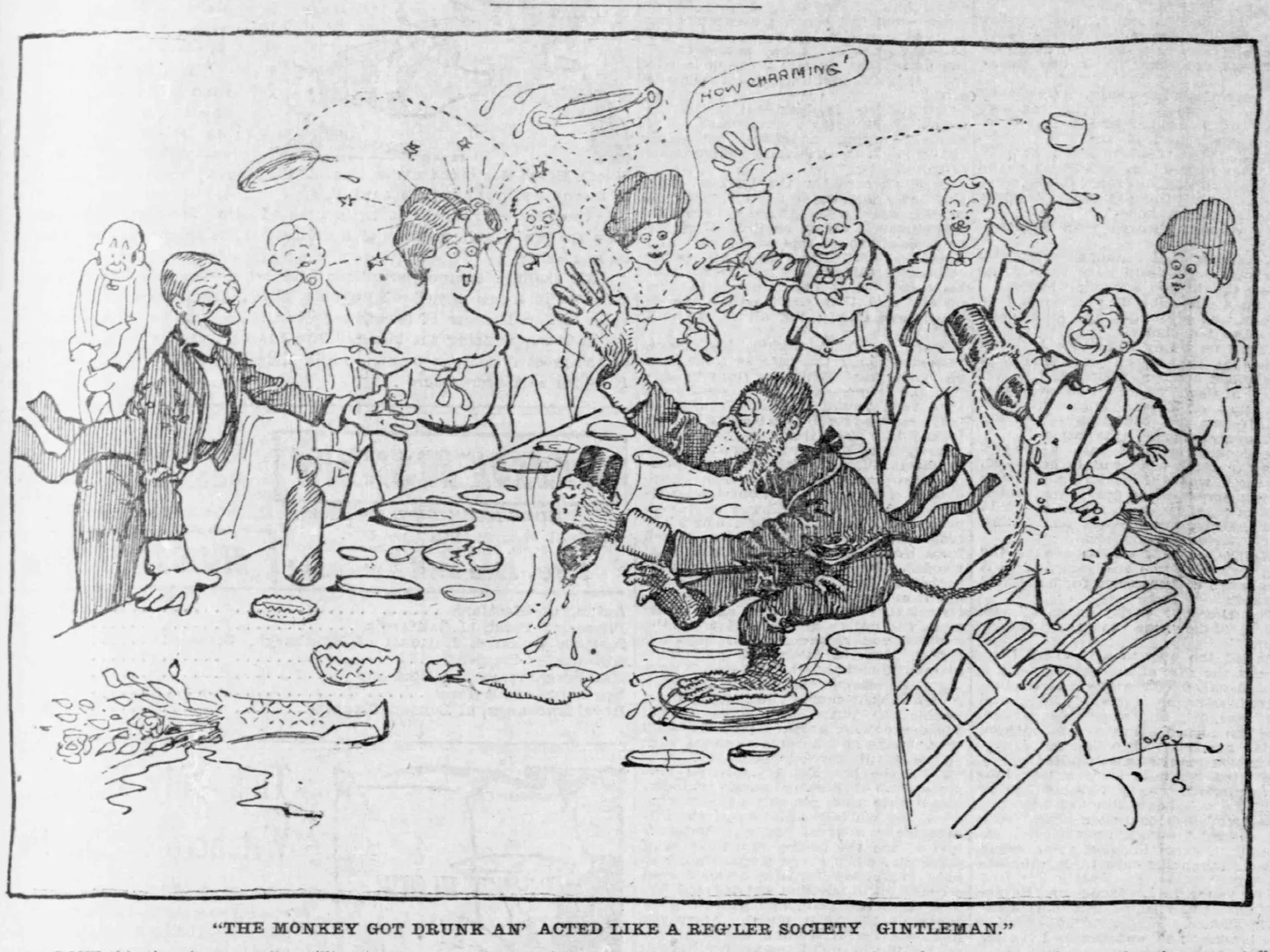
Illustration featured in an article published in The Salt Lake Herald on July 20, 1902.[4]
Primary sources cited
"Monkey as Guest of Honor at a Dinner," The St. Louis Republic, St. Louis, Missouri, July 13, 1902.
Patterson, Arthur, Notes on Pet Monkeys and How to Manage Them (London 1888), Internet Archive, web source.
"Six Monkeys in the Family," The Boston Globe, Boston, MA, July 12, 1902, web source.
Dunne, F.P., "Mr. Dooley: On the Pleasures of the Rich," The Salt Lake Herald, Salt Lake City, UT, July 20, 1902, Library of Congress, web source.