Gilded Age conservatories
A carefully managed natural refuge
The Conservatory—called the “Palm Room” in the Berwinds’ day—was designed for relaxing and socializing. It was neither a greenhouse nor a workspace. The plants that decorated this room were grown in The Elms’ greenhouses and cutting gardens one block away on Sylvan Street.
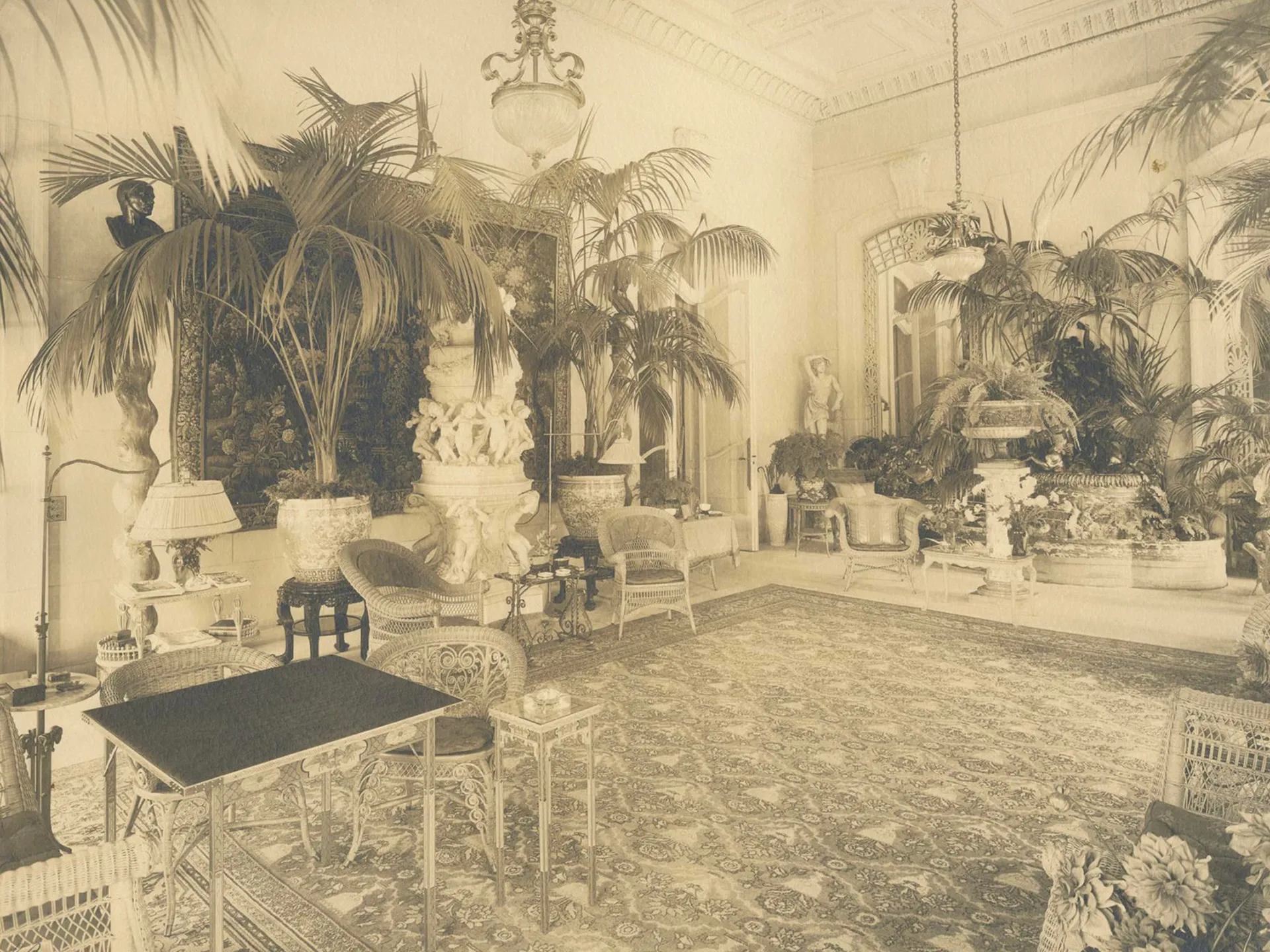
The Conservatory at The Elms, c. 1927.[1]
In the Conservatory, the Berwinds and their guests could access nature in a rapidly industrialized world. This kind of room, with its ability to sustain exotic orchids, tropical palms, and myriad ferns, reflected both scientific innovation and the homeowner’s wealth. As collectors acquired and cultivated rare plants, the associated costs affirmed their aristocratic ambitions.
A similar appetite for botanical spectacle extended to floral design at The Elms. The Berwinds were particularly fond of palms and American Beauty roses. Both were featured in floral decorations at The Elms’ housewarming party in 1901, and the latter showed up at parties in multiple forms, including rose trees, vines, and garlands. Orange trees also appeared at the housewarming, arranged in a grove on the south terrace.
There were hundreds of American Beauty roses…The south terrace was made to represent an orange grove.[2]
The New York Times
The Elms’ greenhouse would supply flowers for events, but Butterton often sourced additional blooms from J.M. Hodgson and Carl Jurgens, the Newport elite’s favorite florists. Herminie would often select the color scheme to complement the event. For example, the 1907 ball for the Prince of Sweden fittingly featured blue and yellow flowers.
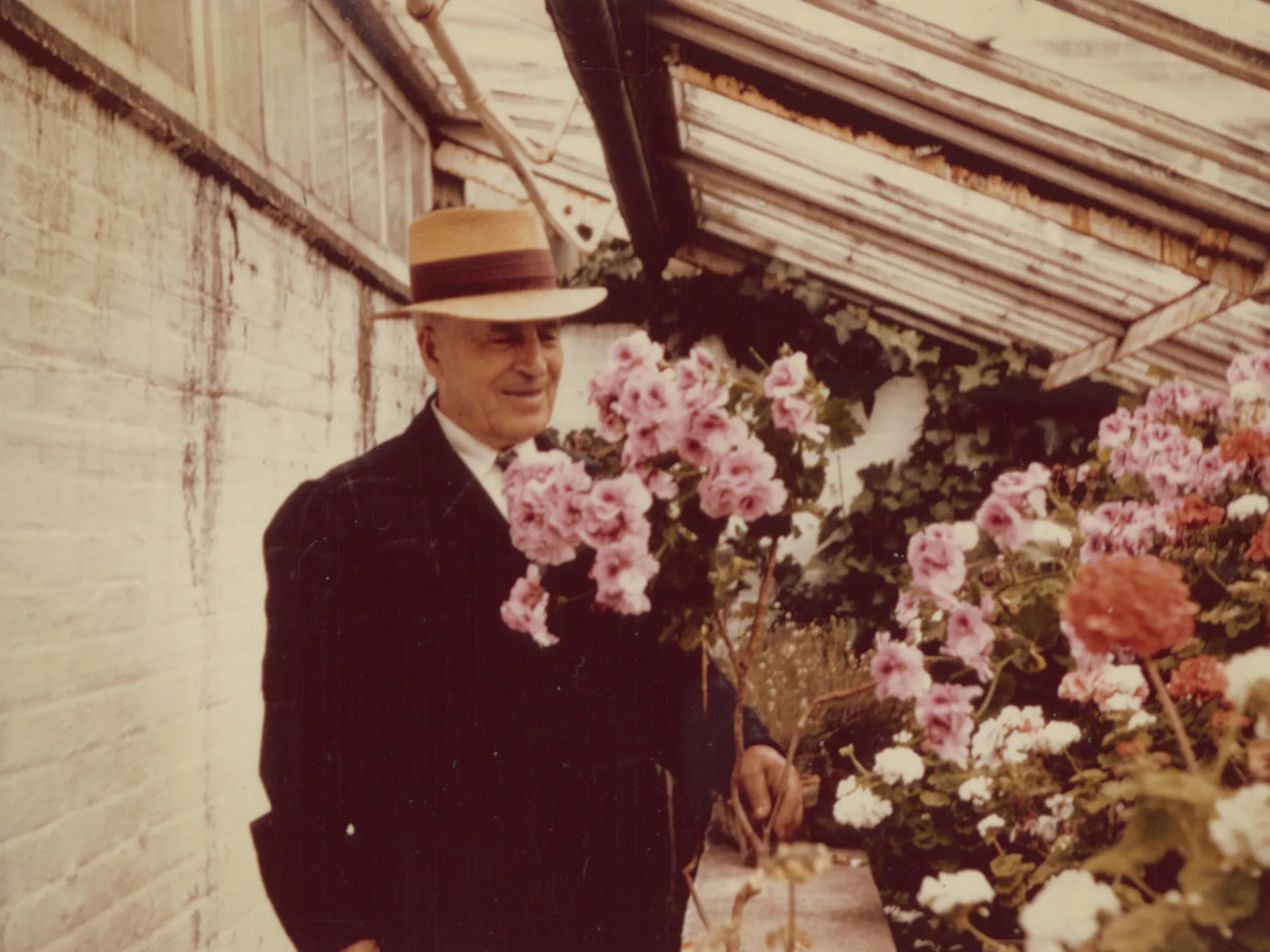
Michael Pignatelli inside one of The Elms’ greenhouses, c. 1960–1973. He began working under the head gardener in 1937.[3]
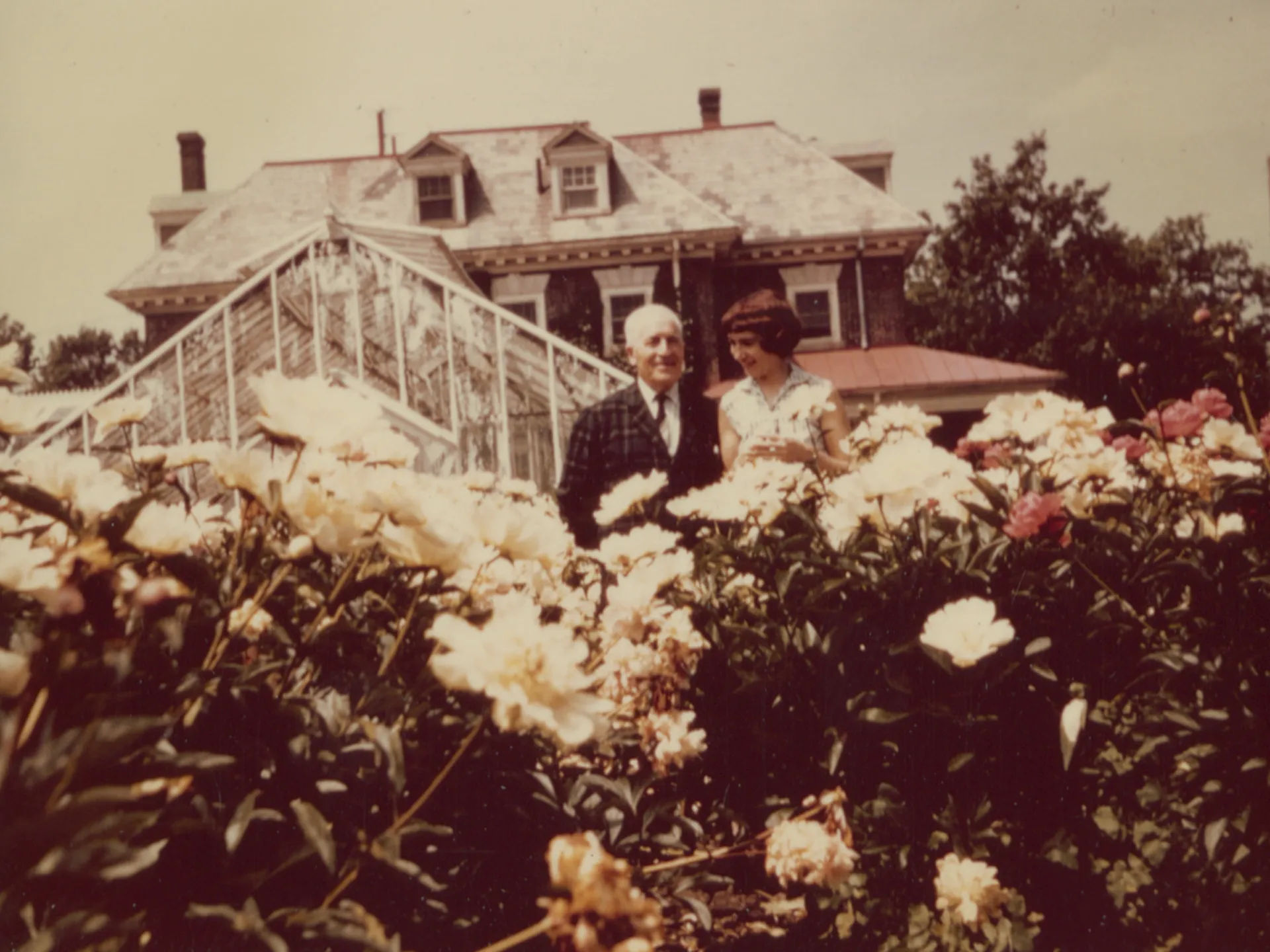
Michael and Gloria Pignatelli among greenhouses and flowerbeds that served The Elms, c. 1960–1973.[4]
Primary sources cited
Pach Brothers, Photograph of the Conservatory at The Elms, 1927, photographic print, The Preservation Society of Newport County, PSNCA.H.004.555.27, web source.
The New York Times, 8/31/1901, p7.
Photographer unidentified, Michael Pignatelli with geraniums, c. 1960–1973, photographic print, The Preservation Society of Newport County, PSNCA.H.004.304.
Photographer unidentified, Michael and Gloria Pignatelli standing amongst the greenhouses and flower beds that served The Elms, c. 1960–1973, photographic print, The Preservation Society of Newport County, PSNCA.H.004.321.