Gilded Age art dealers
A new profession in an era of unprecedented wealth
As Gilded Age elites sought to proclaim their wealth by collecting Old World masterpieces, art dealers rose to prominence in America. These experts, often European themselves, possessed knowledge that burgeoning collectors like Edward lacked. They had the resources to track down pieces worldwide and protected their clients from purchasing fraudulent works.
Nathan Wildenstein ran E. Gimpel & Wildenstein in New York with Ernest Gimpel. The gallery specialized in eighteenth-century French art, and Ernest’s son, René, worked directly with Edward. While René admired Mr. Berwind’s taste, he also found him arrogant. Multiple works Gimpel sold the Berwinds hang in the Met.
He was the first American collector to appreciate our eighteenth-century paintings. [...] I have sold him a dozen pictures which rank among the finest in the world. [...] He would possess nothing, if he had not met me.[1]
René Gimpel on Mr. Berwind
The Duveen Brothers, who operated galleries in London, Paris, and New York, became leading dealers in Old Master paintings and decorative arts. Joseph Duveen famously catered to his clients beyond art, arranging travel and even storing their cigars in private vaults. The firm sold the Berwinds several works in the early 1900s.
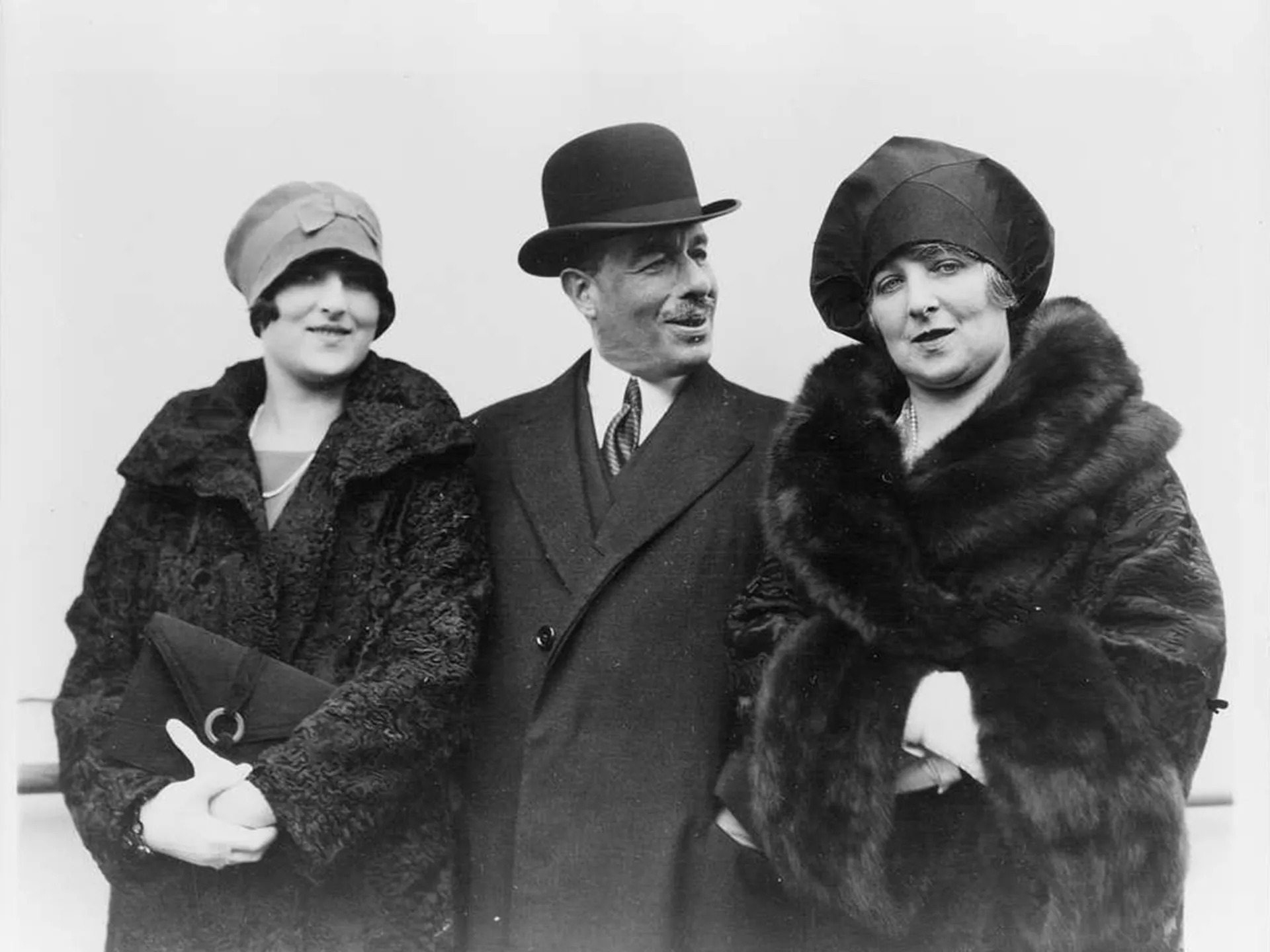
Sir Joseph Duveen, son of cofounder of firm The Duveen Brothers, with his wife (right) and daughter (left), 1920. [2]
Theron Blakeslee ran New York galleries and procured art for institutions like the Met. He brought the first painting by English artist George Romney to the U.S., which he sold to Edward’s fellow industrialist, sugar magnate H.A. Havemeyer. Mr. Berwind was one of Blakeslee’s most esteemed clients in the early twentieth-century.
Primary sources cited
- René Gimpel, Diary of an Art Dealer, trans. John Rosenberg (New York: Farrar, Straus and Giroux, 1966), 37.
Bain News Service, Sir Jos. Duveen, art authority, wife & daughter Dorothy, 1920, photograph, Library of Congress, web source.