A dinner party for twelve
Perfecting the details of this lavish social ritual
Gilded Age dinner parties were carefully orchestrated affairs designed to impress, from the menu to the table setting and service. Intimate dinners enabled the Berwinds to showcase their chef, staff, and striking Dining Room. For guests, accepting such invitations affirmed their social standing. Beyond status, these events gathered like-minded peers for an evening of easy conversation.
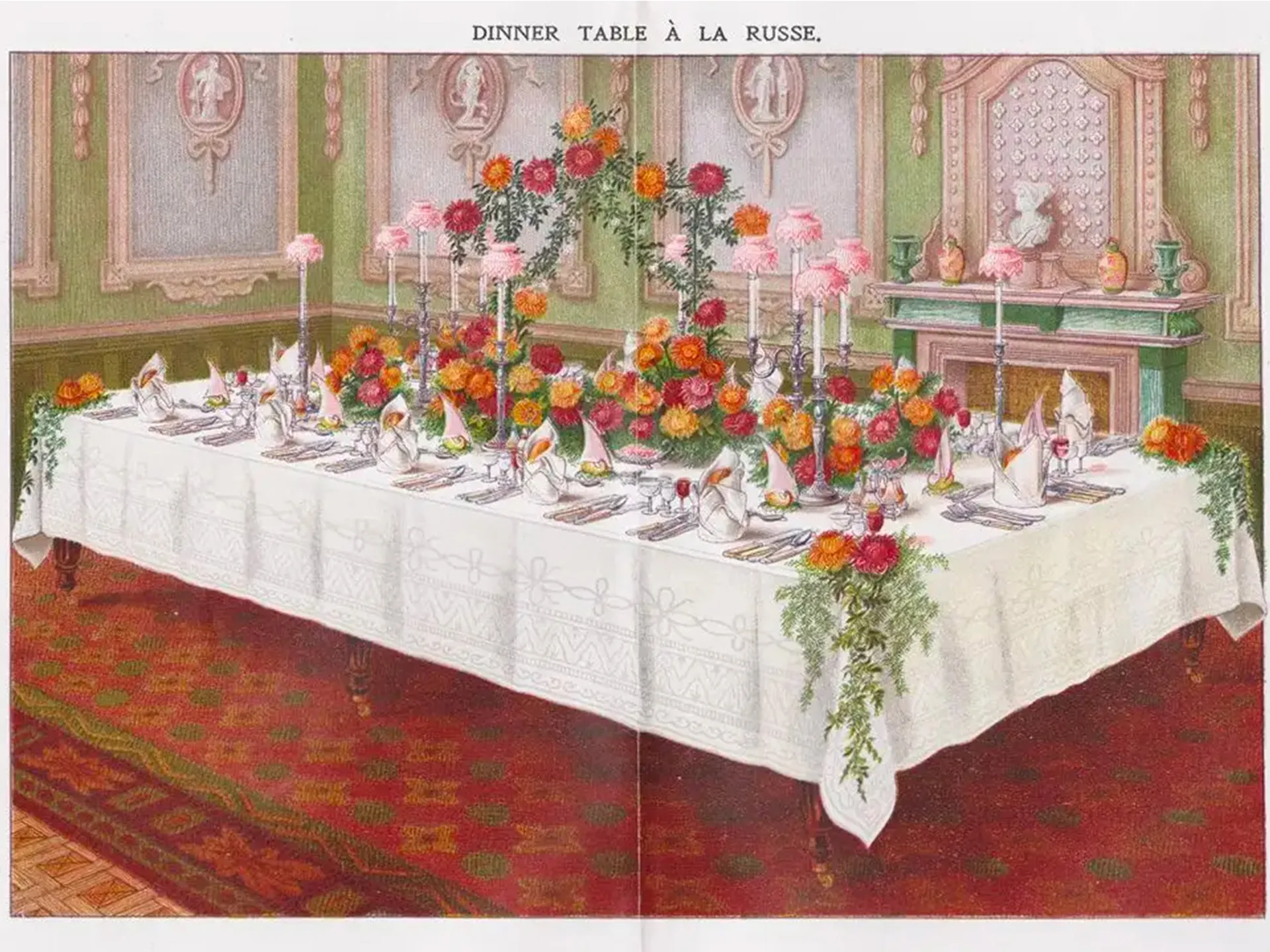
Dinner Table à la Russe, illustration from Mrs. Beeton's Book of Household Management, chromolithograph, 1907.[1]
By the early 1900s, individually plated courses had replaced buffet-style dining among the wealthy. This style of Russian service, known as à la russe, was a deliberate choice—an opportunity for extravagance in both menu selection and the number of staff to execute it.
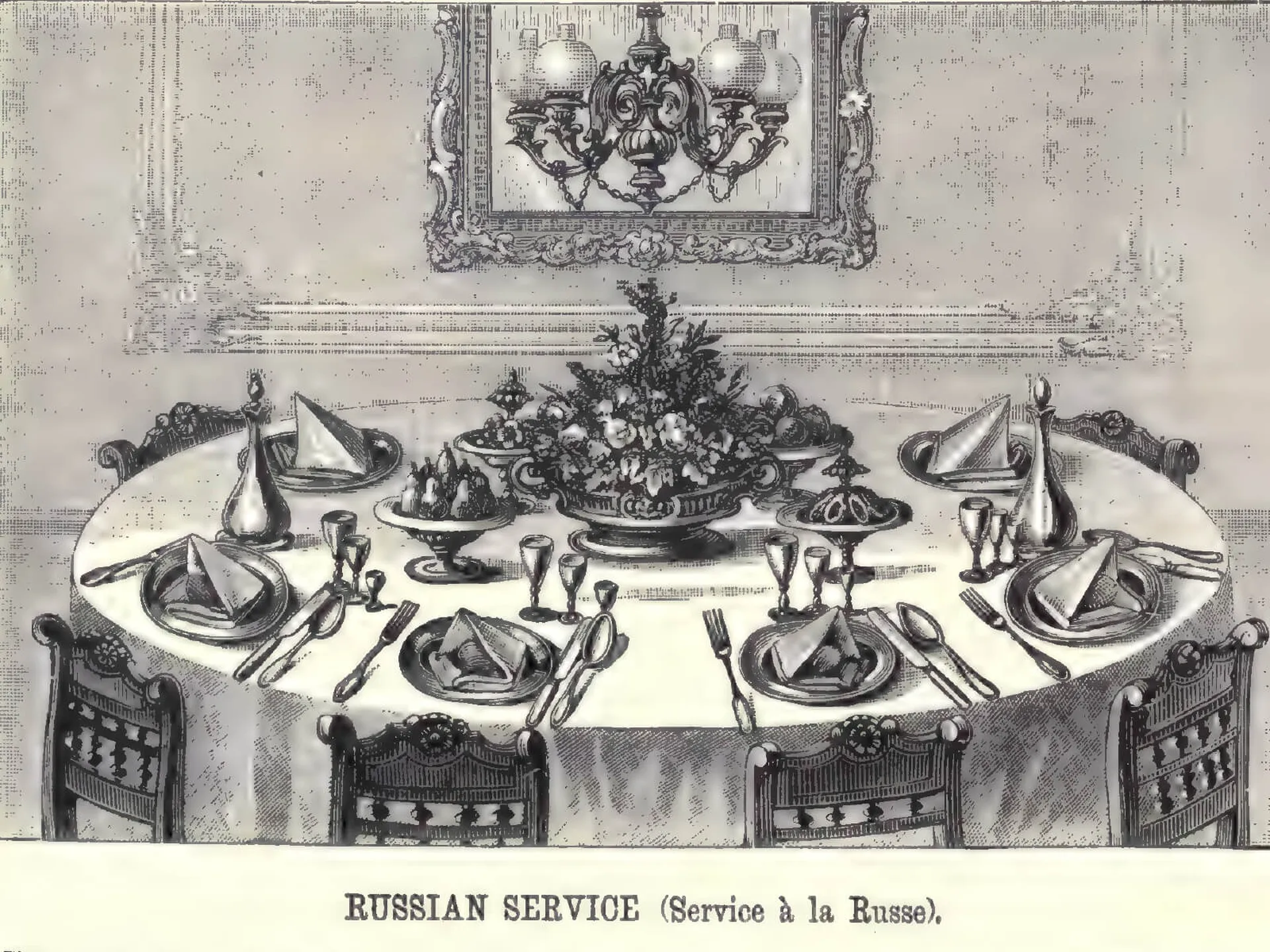
Russian Service, illustration from The Epicurean, 1894.[2]
Herminie chose the china, glassware, and silver in consultation with the housekeeper and butler. Service ran like clockwork; each staff member knew their part. The butler stood behind Edward’s chair, with a footman behind Herminie’s. Additional footmen silently carried plated courses to the table.
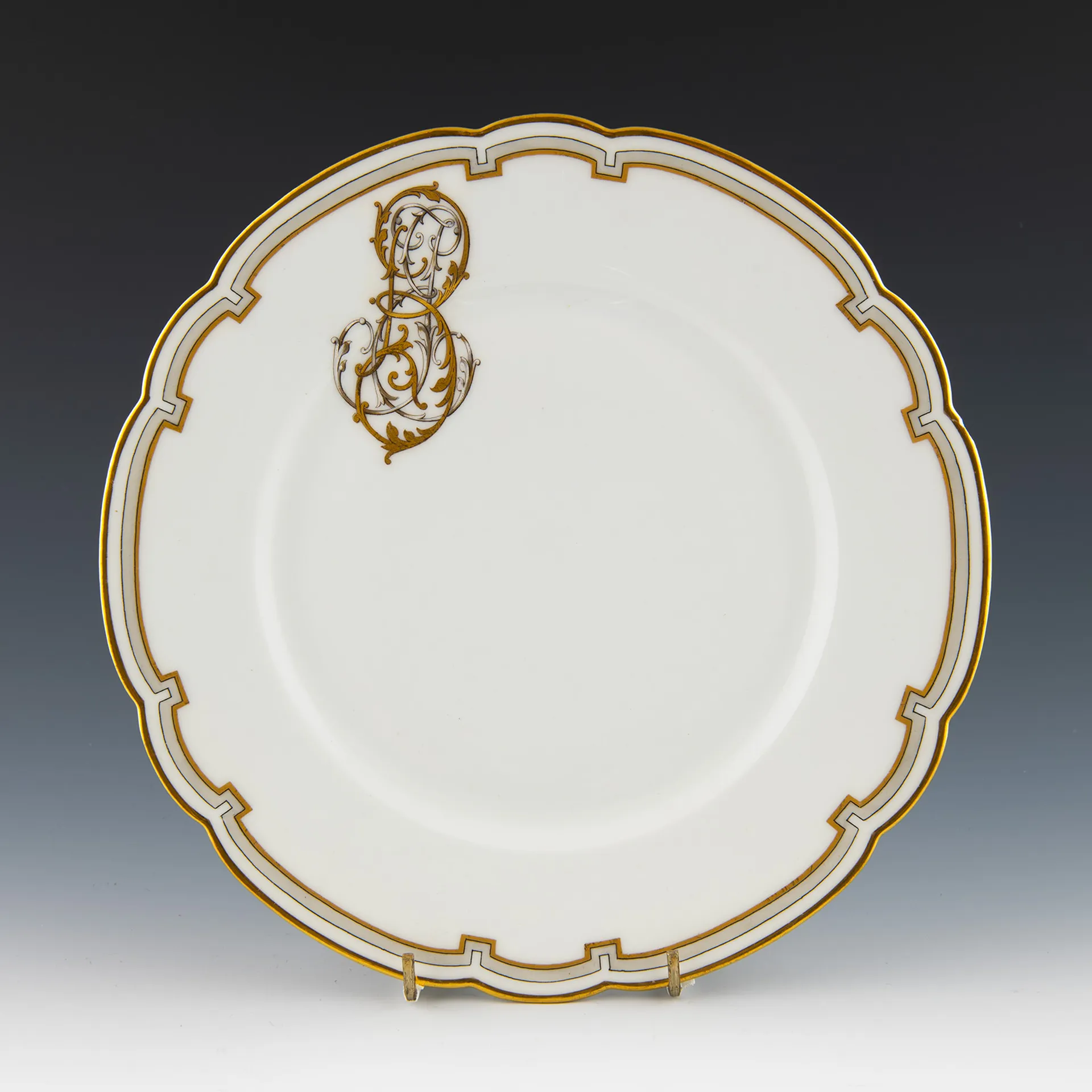
A dinner plate from the Berwinds' collection monogrammed with "EJB."[3]
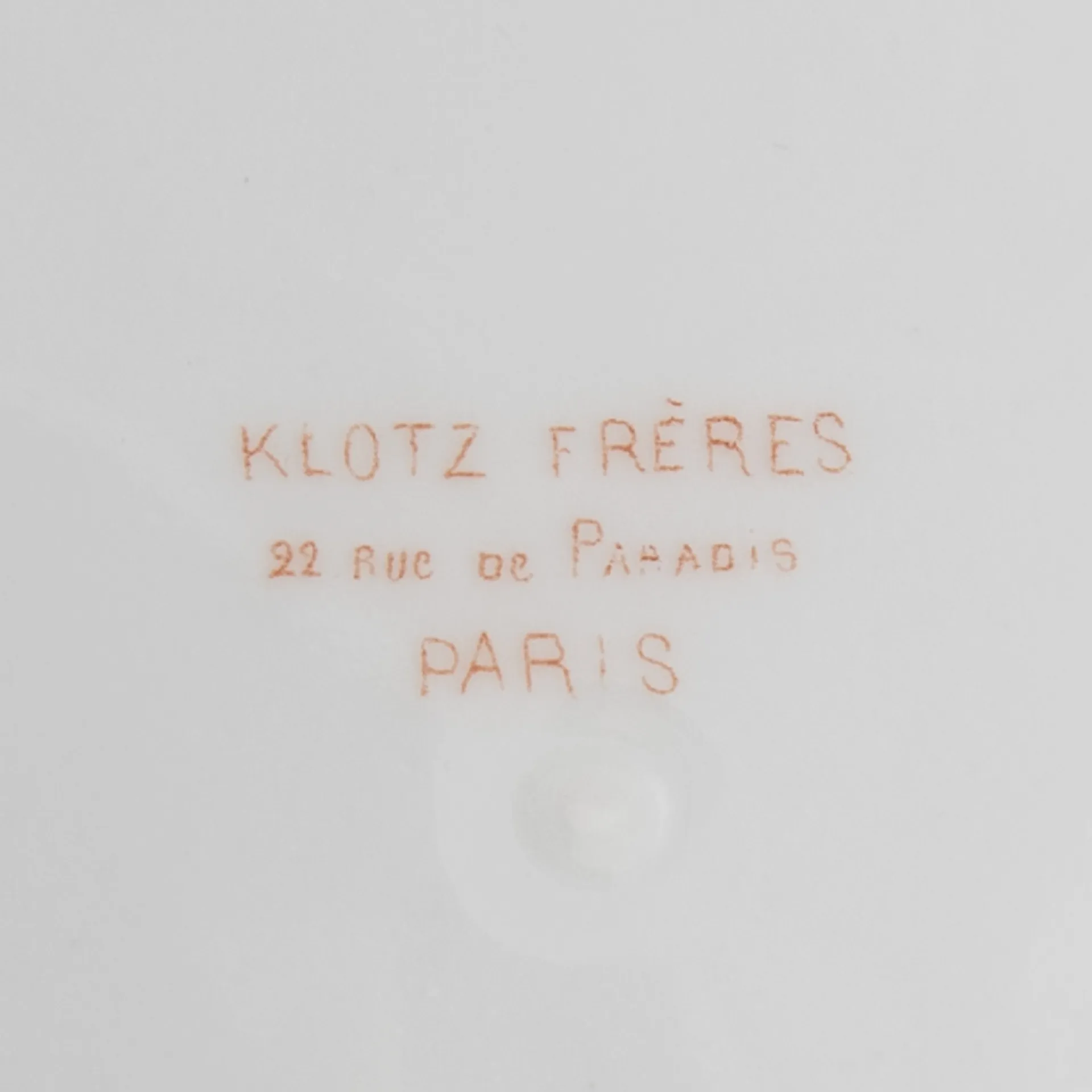
Maker's mark on the underside of the plate.[4]
An impeccable hostess like Herminie created the guest lists and seating arrangements with care. As tastemaker Ward McAllister observed, “The placing of your guest at table requires an intimate knowledge of society. It is only by constant association that you can know who are congenial.” Ideal dinner conversations were quiet, apolitical, and impersonal.
Primary sources cited
Beeton, Isabella, Dinner Table a la Russe, Mrs. Beeton's Book of Household Management, 1907, chromolithograph, Ursus Books, Item no. 152072, web source.
Ranhofer, Charles, The Epicurean: A Complete Treatise of Analytical and Practical Studies on the Culinary Art (New York, 1894), 10, MSU Libraries, web source.
Hansen, A dinner plate from the Berwinds' collection monogrammed with "EJB.", n.d., photograph, The Preservation Society of Newport County.
Hansen, Maker's mark on the underside of the plate, n.d., photograph, The Preservation Society of Newport County.