Everyday cooking & dining
Preparing meals for the family & staff
The kitchen staff was always busy, even when the Berwinds weren’t entertaining. A popular dish they might have prepared was turtle soup. For centuries, turtles were prized for their similarity to veal. When they were eventually overfished, mock turtle soup emerged. Chefs used a calf’s head and/or feet as the protein.
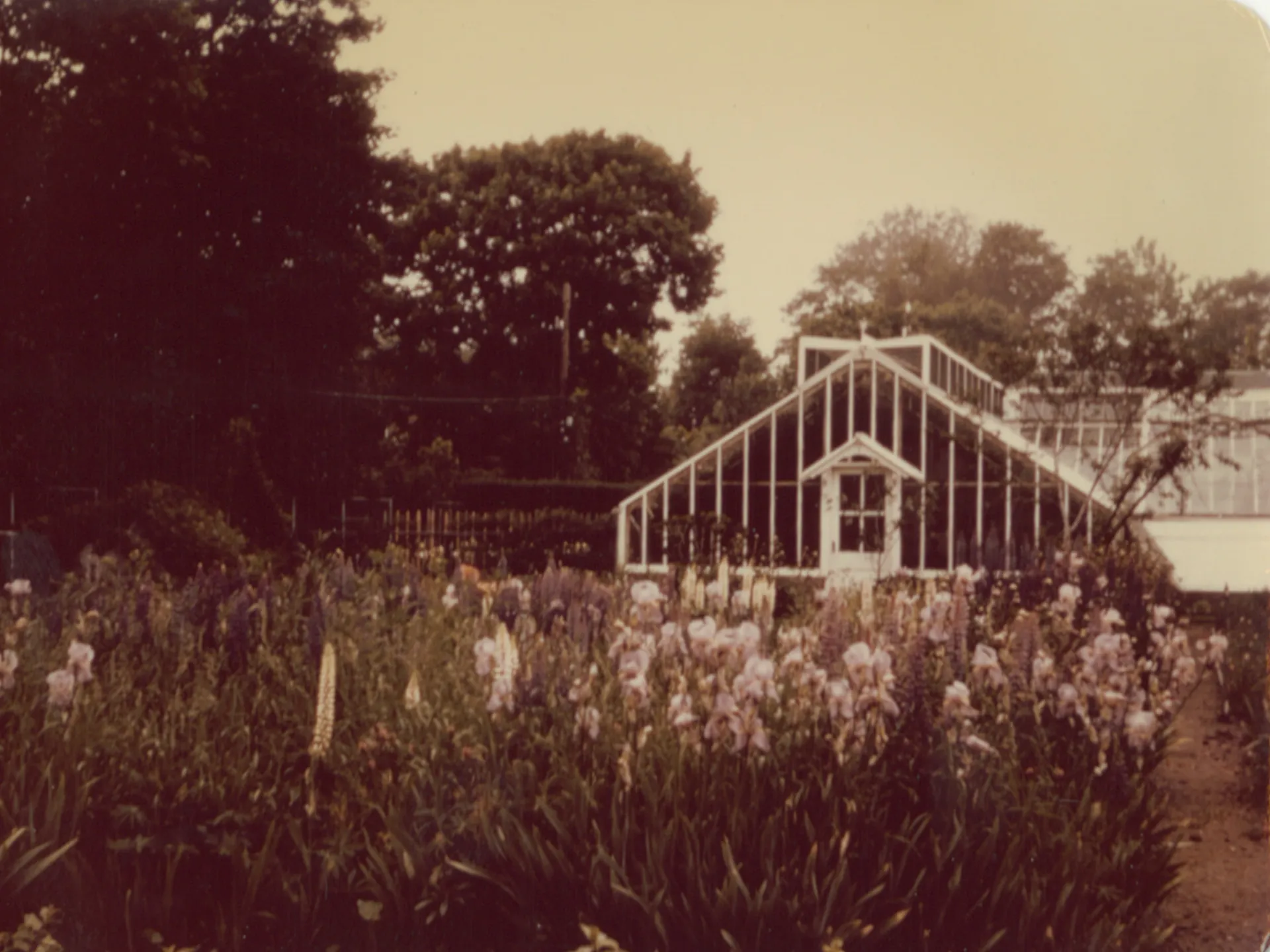
A section of flower beds and a green house that served The Elms, c. 1960–1973. [1]
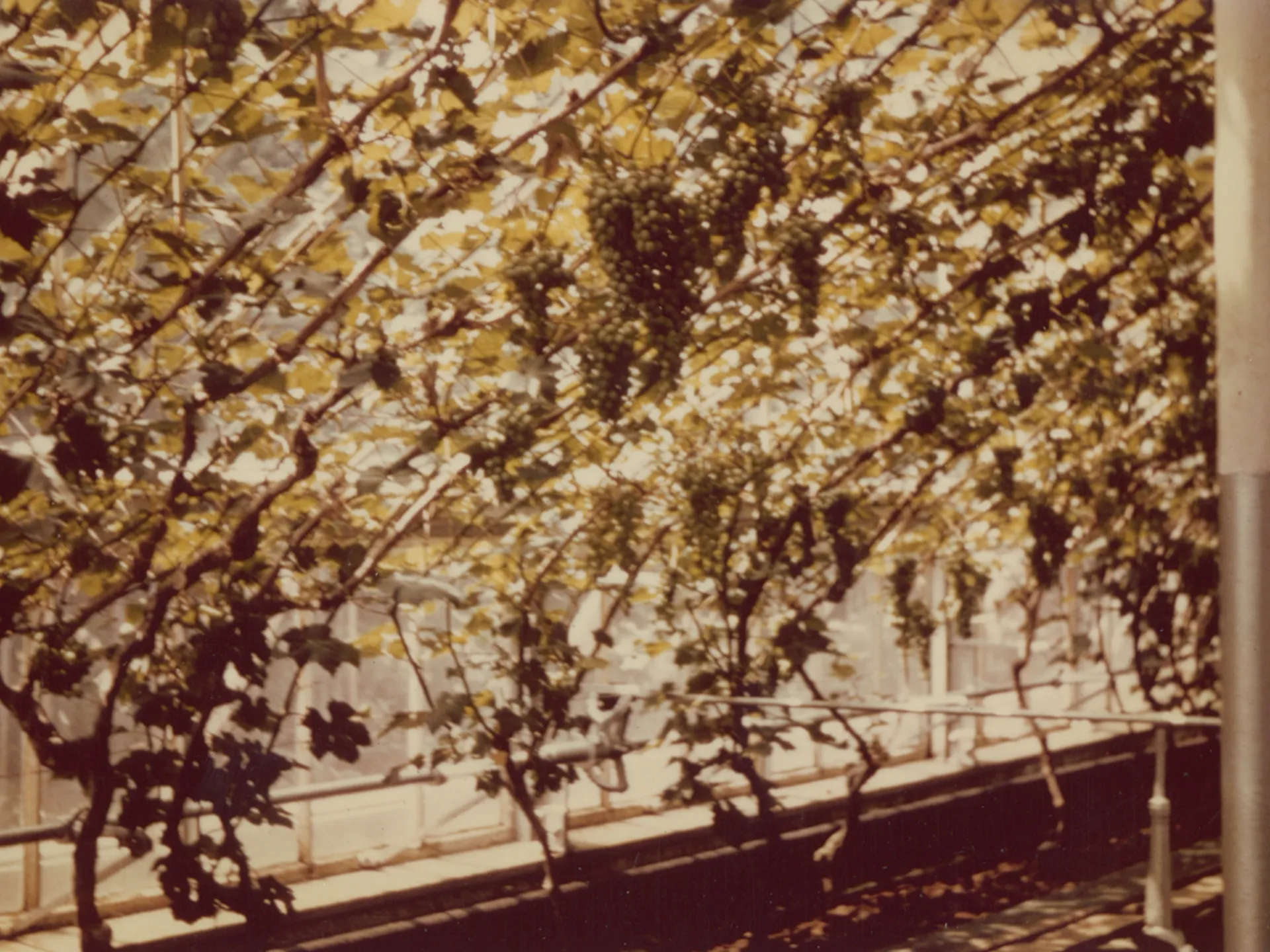
Grape vines growing inside one of the hothouses that served The Elms, c. 1960–1973. [2]
Ingredients for everyday cooking were regularly sourced from The Elms’ gardens and greenhouses located one block away from the house. Head gardener Bruce Butterton and his team cultivated various vegetables, along with nectarines, grapes, melons, and figs. Additionally, The Elms could source additional produce from various farms on Aquidneck Island and numerous greengrocers in Newport’s bustling center.
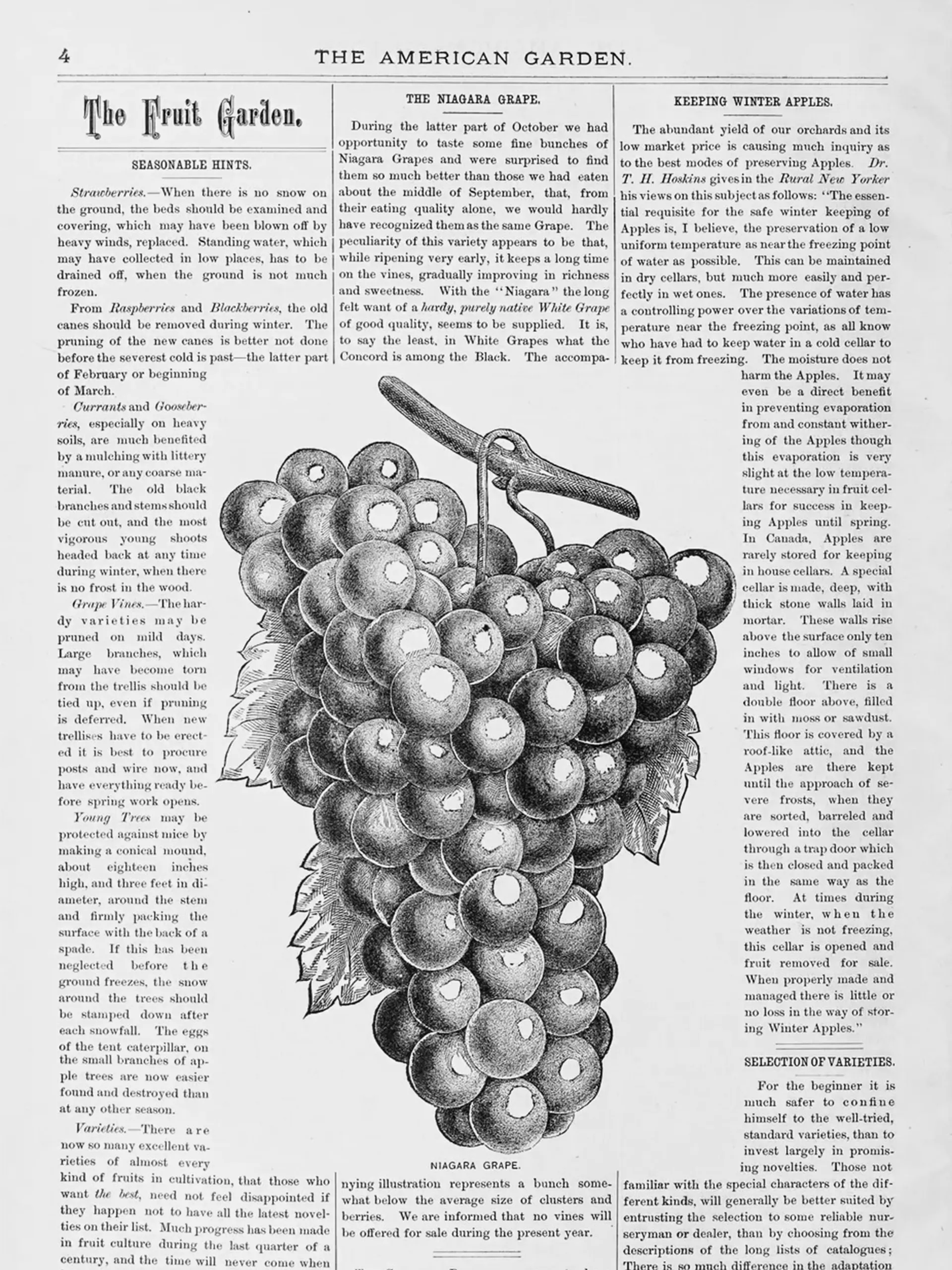
Illustration of The Niagara Grape, from The American Garden, January 1881. [3]
The Main Kitchen also prepared meals for The Elms’ staff. They took their meals in specific areas designated by hierarchy. The upper staff—the butler, housekeeper, superintendent, and chef—ate in the Kitchen Pantry. The rest of the workers ate in the room off the Main Kitchen that houses the museum store today.
Primary sources cited
Member of the Pignatelli family, Photograph of a section of flower beds and a green house that served The Elms, and were tended to by Michael Pignatelli, c. 1960–1973, The Preservation Society of Newport County, PSNCA.H.004.288.
Member of the Pignatelli family, Photograph of grape vines growing in one of the hothouses that served The Elms, c. 1960–1973, The Preservation Society of Newport County, PSNCA.H.004.301.
Hexamer, Dr. F. M., "The Fruit Garden," The American Garden, Third Series. Vol. 1, No. 3 (1881): 4, Biodiversity Heritage Library.