The end of an era
The season, and the Gilded Age, draw to a close
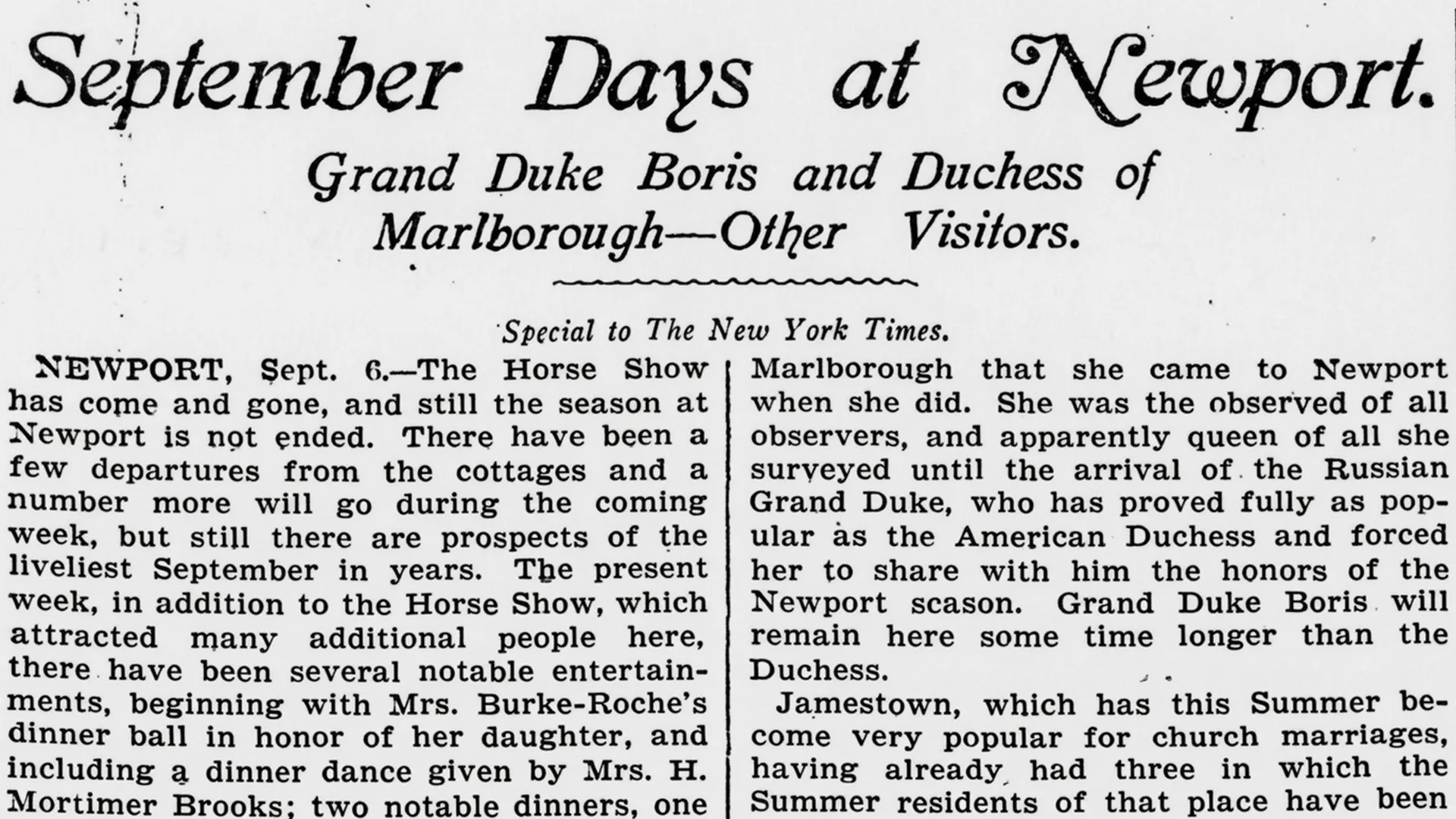
Article from The New York Times, September 7, 1902.[1]
Although no definitive event marked summer’s end in Newport, the season wound down by late September and early October. Some cottagers may have returned to their New York homes. Many visited other locales during the fall, like the resort town of Hot Springs, VA, where Herminie often stayed after Newport.
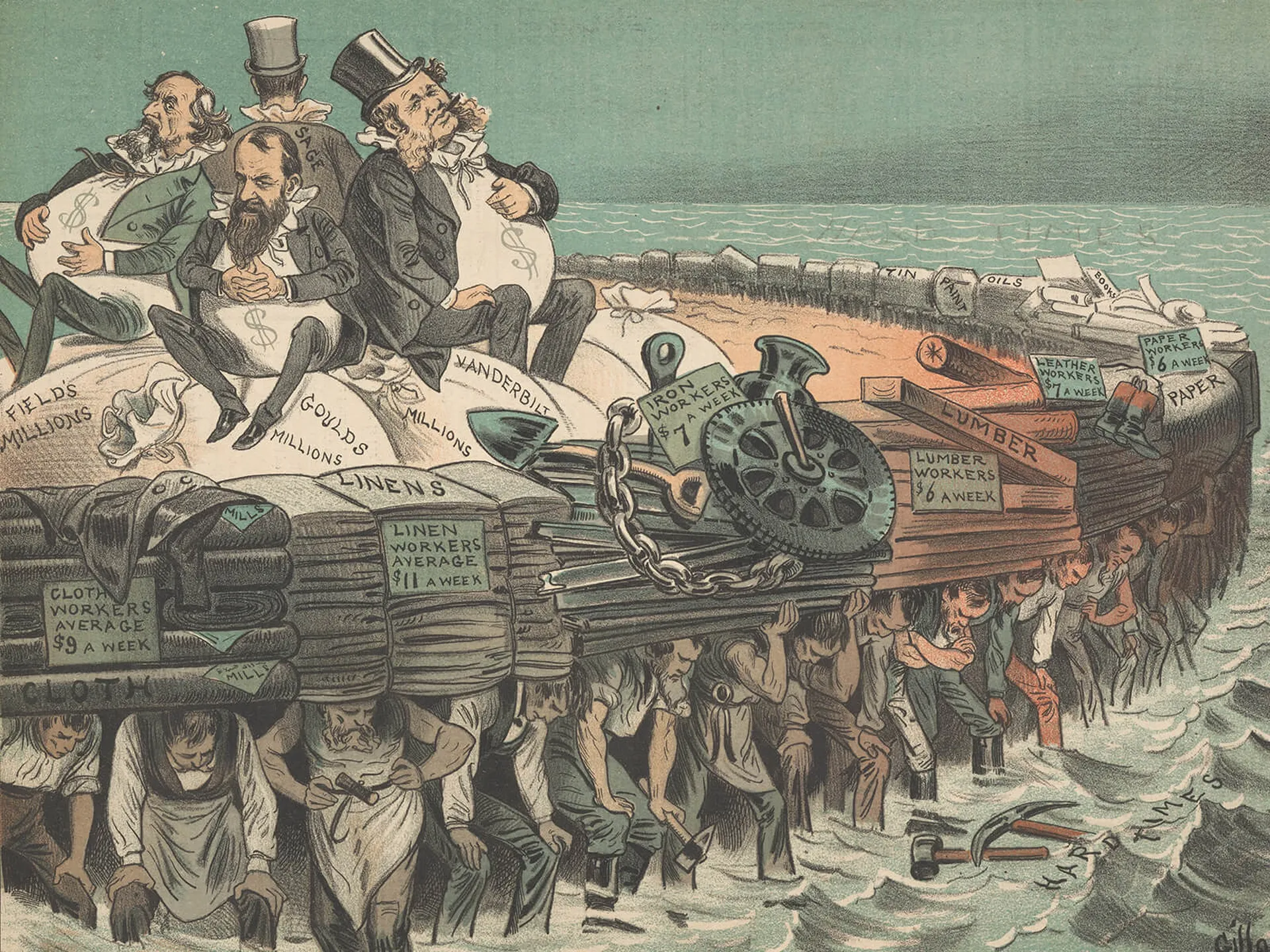
Cartoon depicting business magnates carried by workers of various professions, Puck magazine, 1883.[2]
Like the waning of Newport’s summer season, the fervor of the Gilded Age subsided as new legislation curbed corruption, broke up trusts and monopolies, and established a federal income tax. Meanwhile, suffrage and labor reforms expanded the rights of women and the working class. World War I also radically reshaped American society.
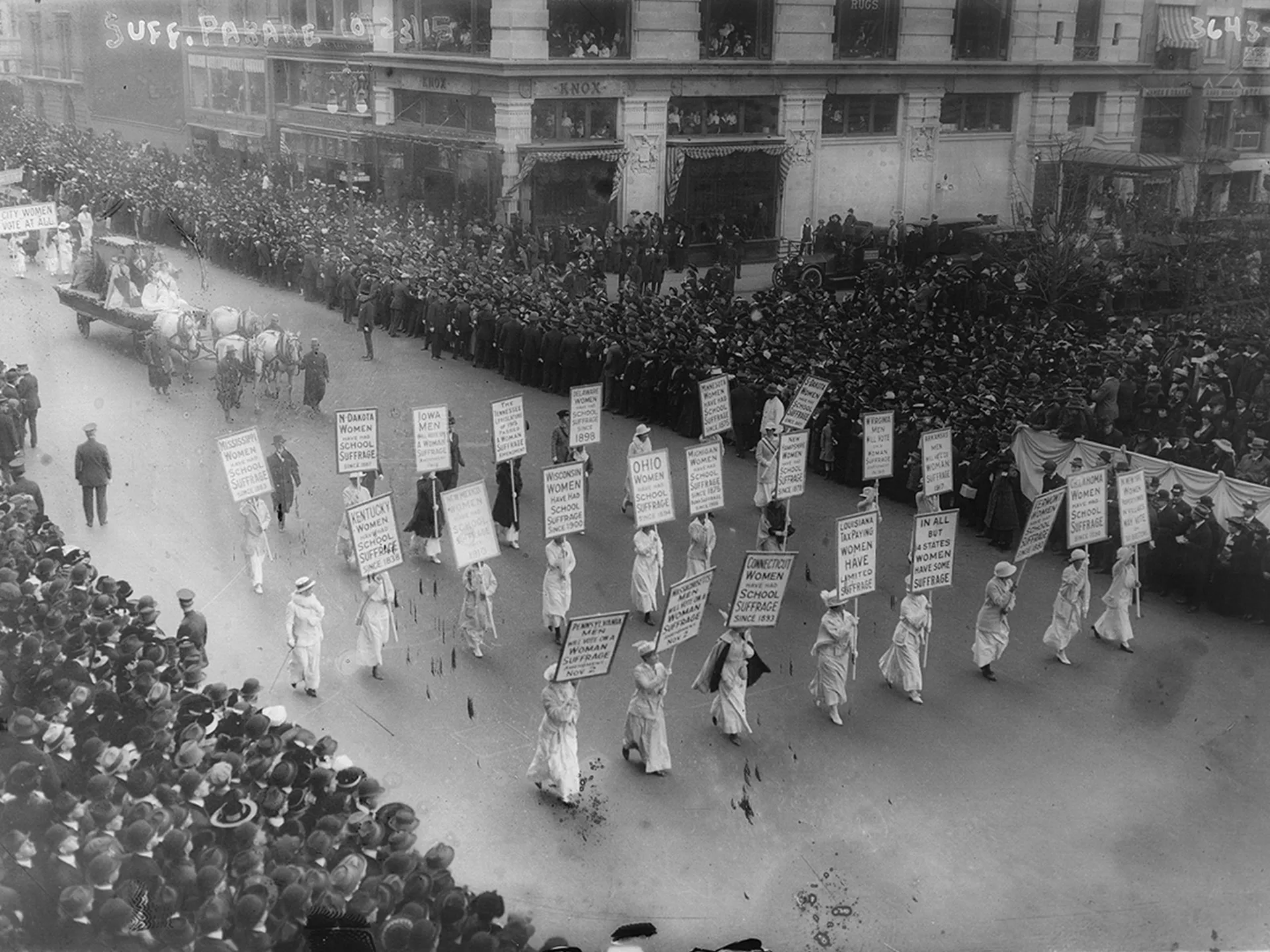
Suffragists marching for the women's right to vote, most likely in New York City, 1915.[3]
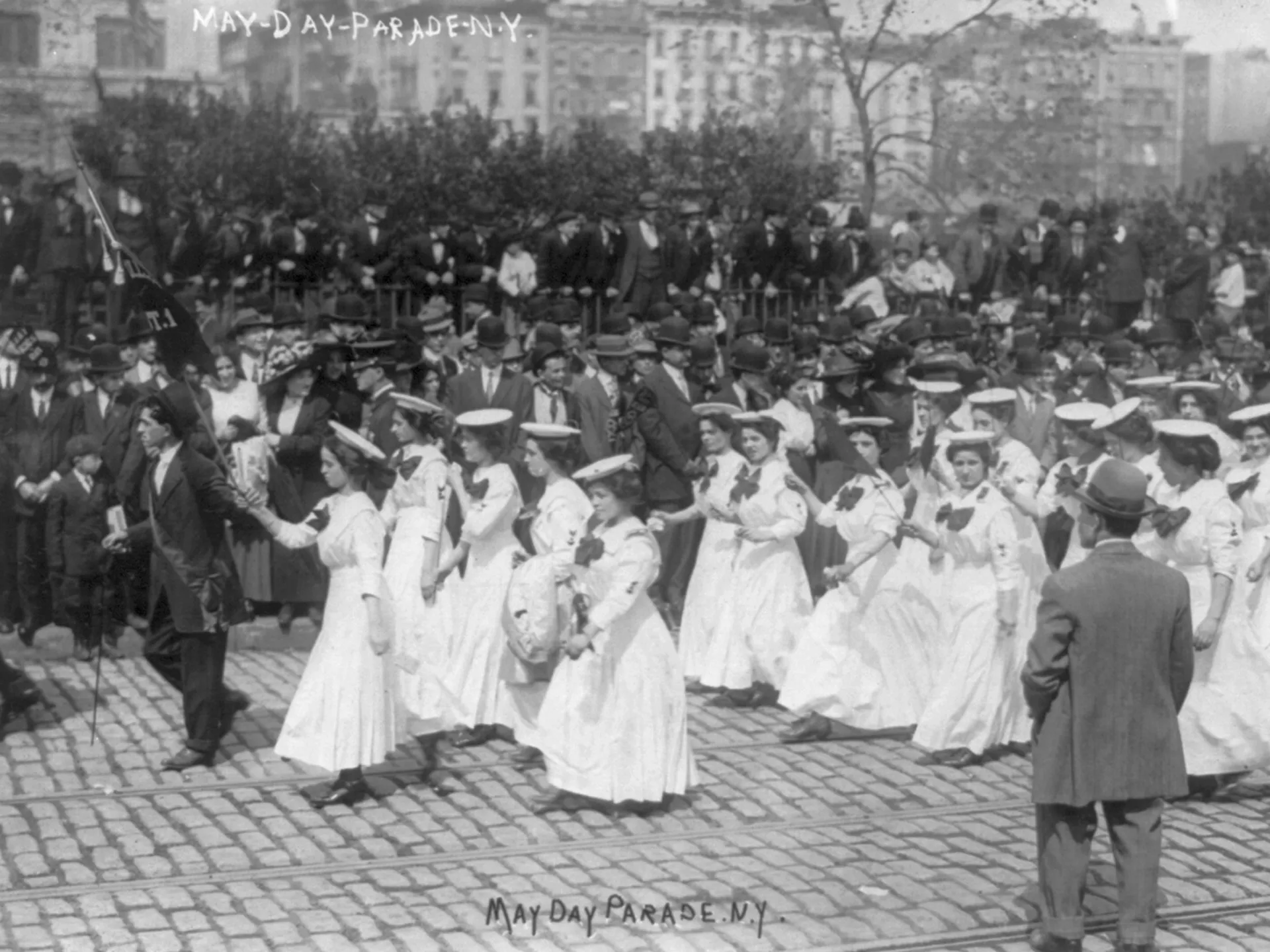
Women marching at the May Day Parade, New York, 1910.[4]
Following the stock market crash of 1929 and resulting Great Depression, many Newport cottages were sold. The families who were able to keep their homes reigned in their exorbitant spending and lavish entertaining.
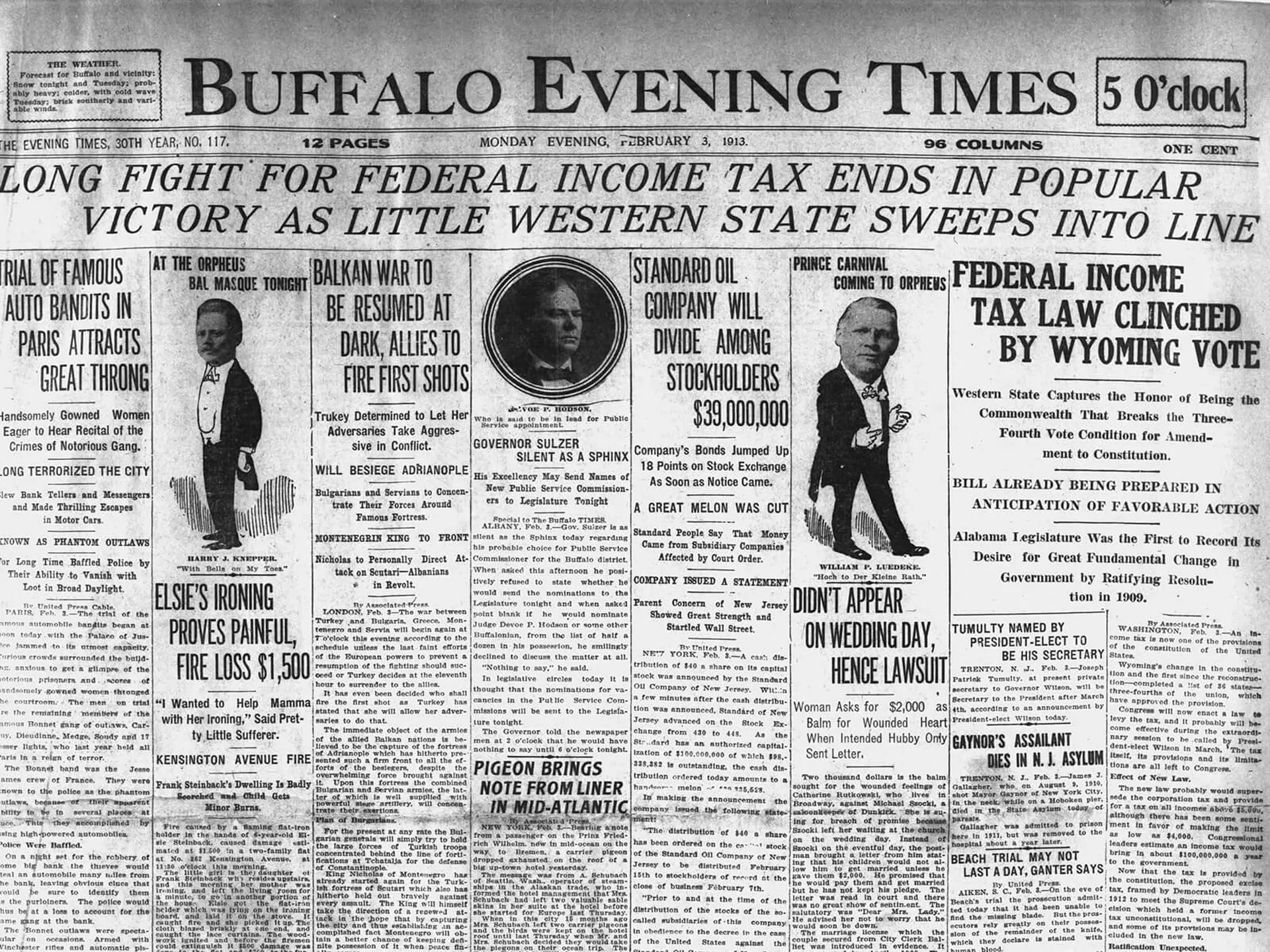
Article from The Buffalo Times, February 3, 1913.[5]
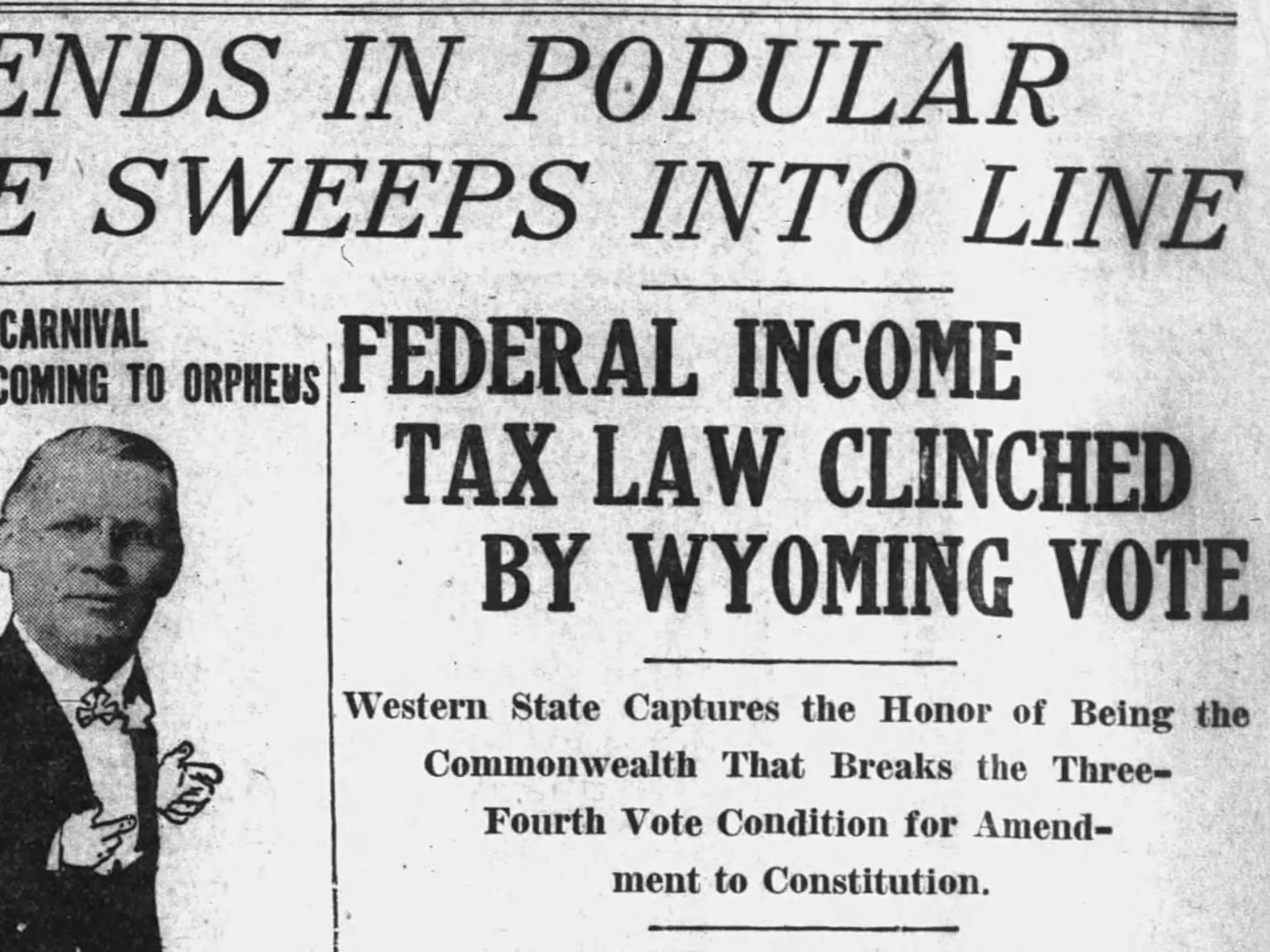
A closer look at the article from The Buffalo Times, February 3, 1913.
Primary sources cited
“September Days at Newport,” The New York Times, September 7, 1902, pg. 9. Image enhanced for legibility.
Bernhard, Gillam, "The Protectors of Our Industries," Puck, New York, February 7, 1883, chromolithograph, Library of Congress, web source.
Suffragists Marching, Probably in New York City in [1915], October 23, 1915, photographic print, Library of Congress, no. 97500064, web source.
Unidentified photographer, May Day Parade, N.Y., 1910, photographic print, Library of Congress, Prints & Photographs Division, reproduction number LC-USZ62-50083.
The Buffalo Times, February 3, 1913, p.1.